
Listen to this Article
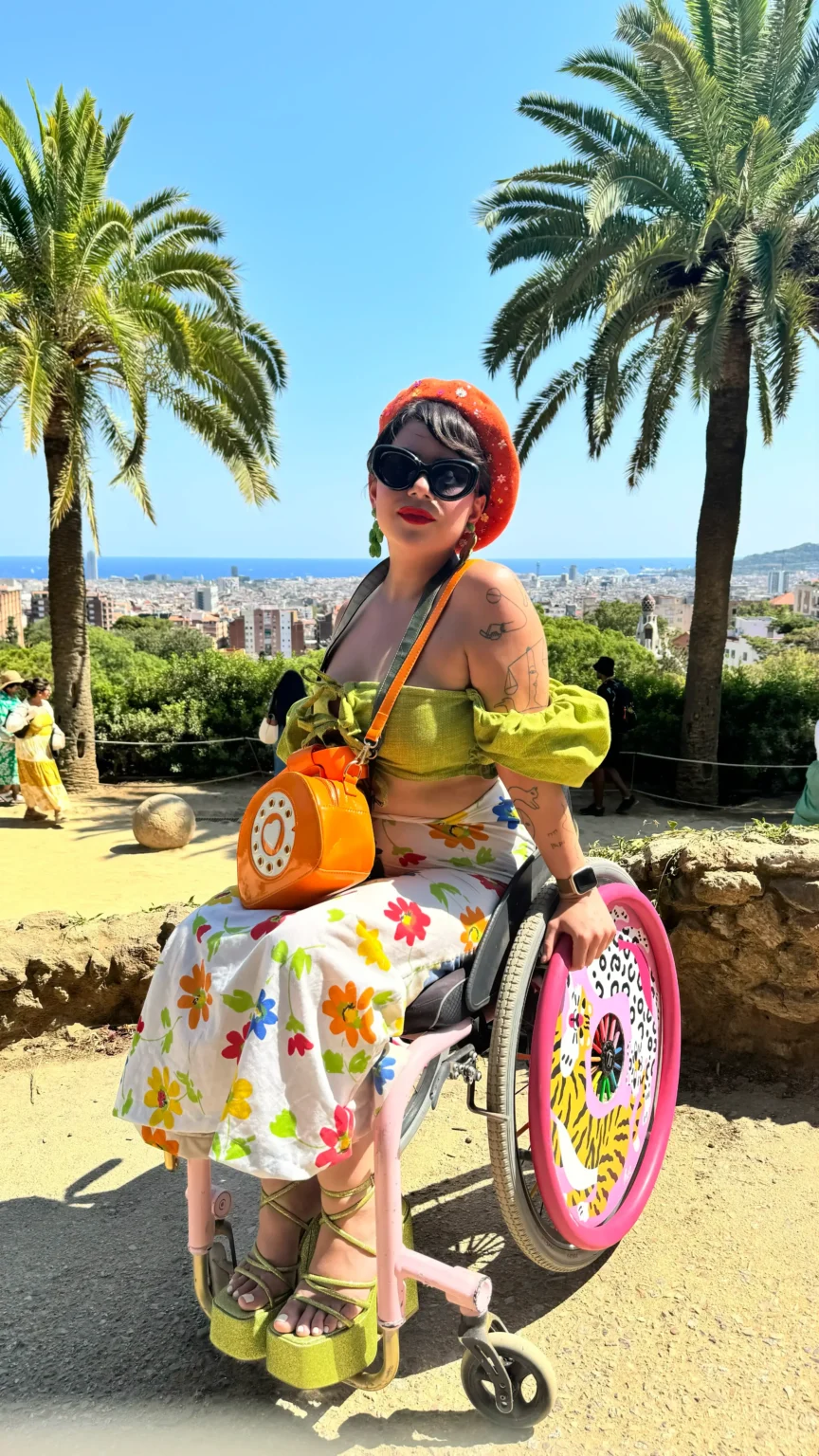
Samantha Jade Duran is a Miami creator bringing DIY adaptive fashion to life. As an ambulatory wheelchair user, she spotted something fashion consistently misses: clothing fits differently standing than seated. Waistbands rise, skirts pool and sleeves snag. She turned that reality into Seated vs. Standing, a series that reveals how clothing really performs in everyday use. Think fashion criticism with a sewing kit on standby.
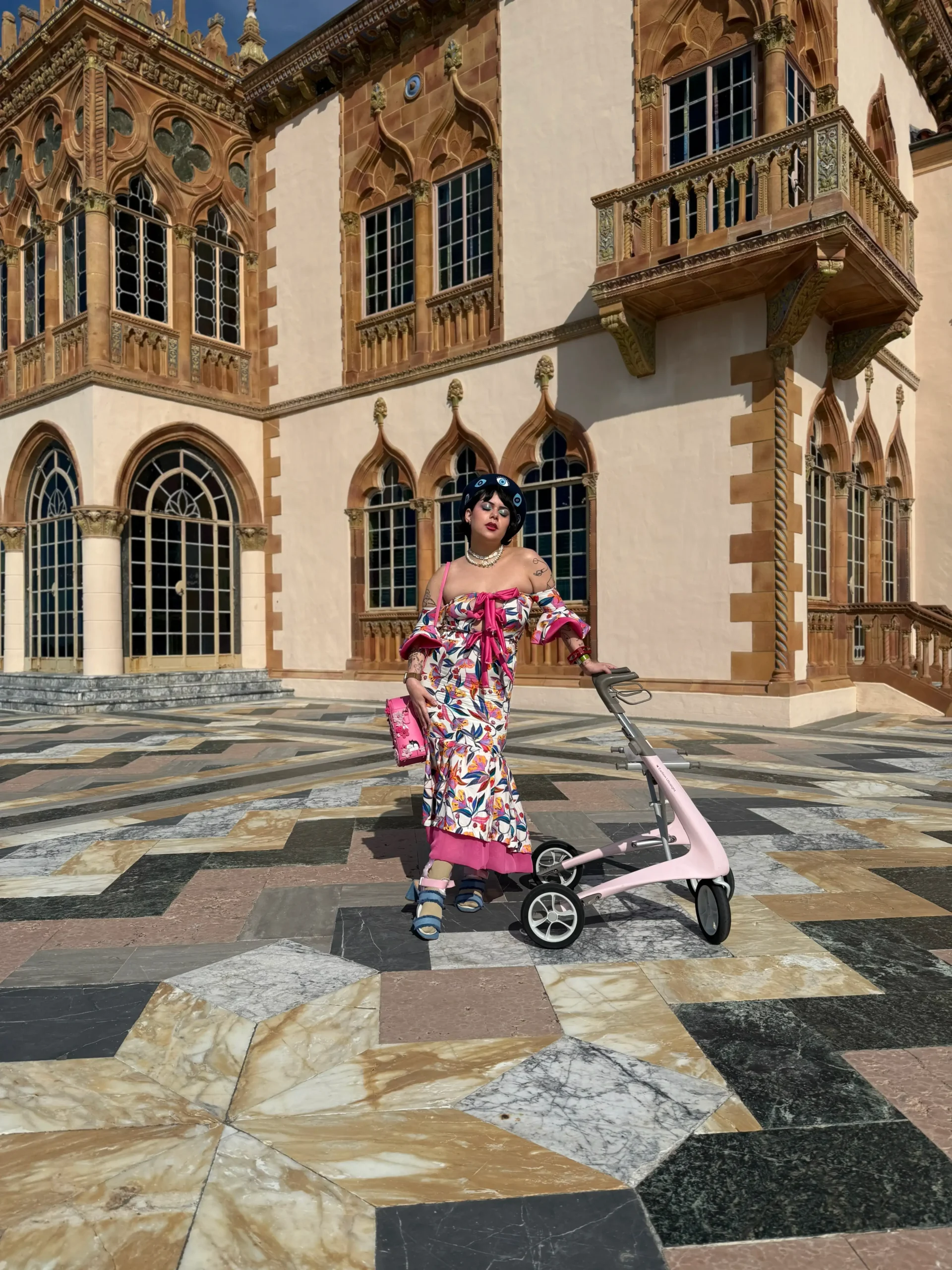
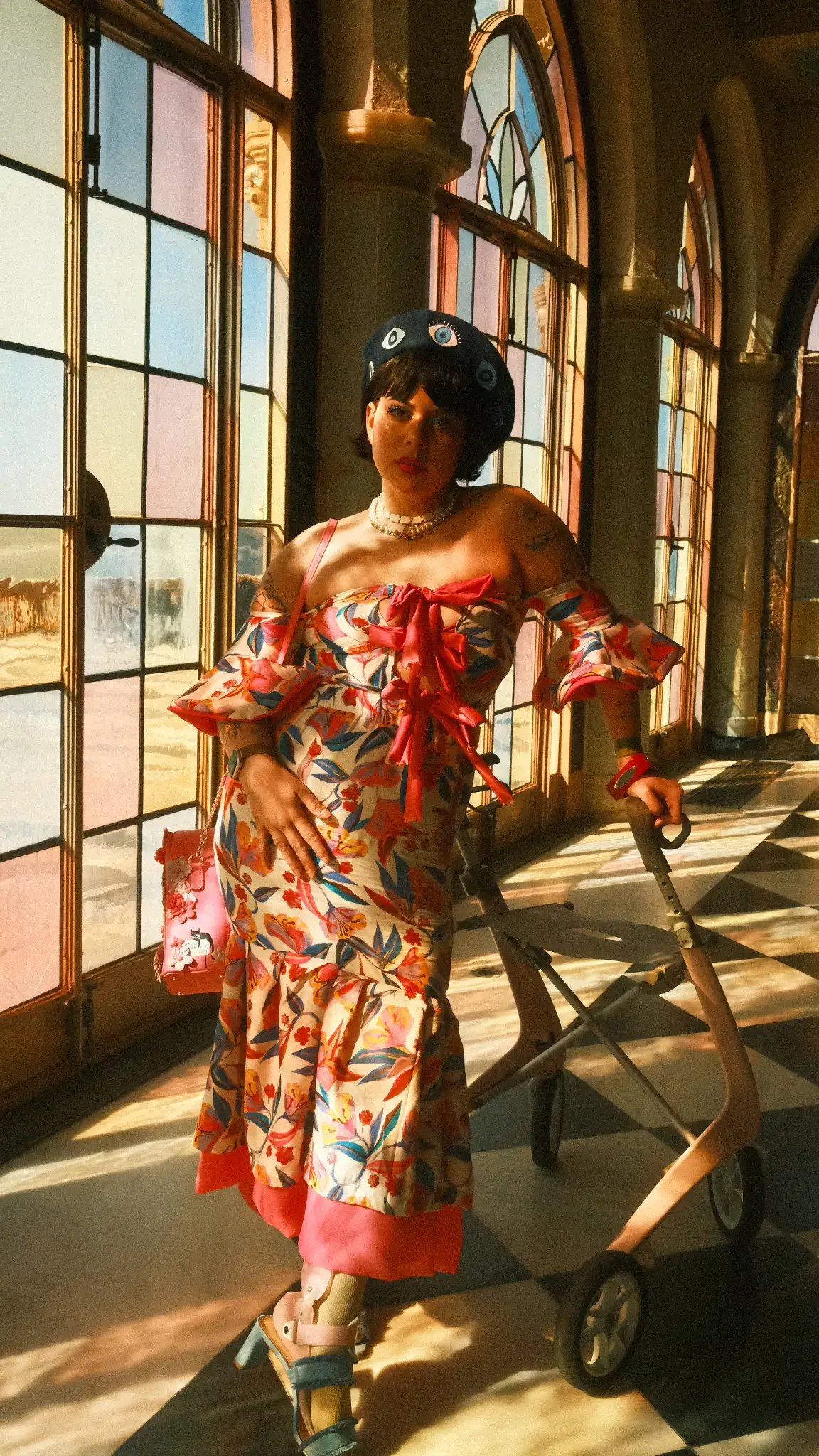
She taught herself to sew last year and dove straight into couture-level work. Her first creation? A black crepe two-piece: flared pants and an off-shoulder top lined with rows of glossy buttons, an ode to 80s glamour. Not an alteration, but a full build. When she commits to colour, it blooms . . . she loves to infuse her designs with pink energy. When she commits to adaptive design, it works in real life, not just in the mirror.
Her medical story shapes her style. Born with a genetic bone condition that seeded tumours, and with Ehlers-Danlos syndrome keeping connective tissue fragile, Samantha has lived through fractures, surgeries, and leg lengthening. This spring she added an intrathecal pain pump (a palm-sized device) under her skin that delivers steady microdoses into spinal fluid. It changed her relationship with clothes: stiff waistbands dig, tight silhouettes irritate and magnets are off-limits. Ease became the design brief.
DIY couture
So, she designs for the body she has today. Comfort sits in front row, and comfort looks glamorous. Sleeves are built for pushing her chair. Skirts tailored to stay clear of spokes. Front closures you can tie or clip yourself. O-rings and D-rings that glide and lock. Velcro tabs that secure in seconds. Fabric loops that invite a quick pull. Elastic that forgives fluctuations. Shirring earns star status . . . those stretchy parallel lines that let panels expand and contract through a day when size feels like a moving target. Chic is indeed functional.
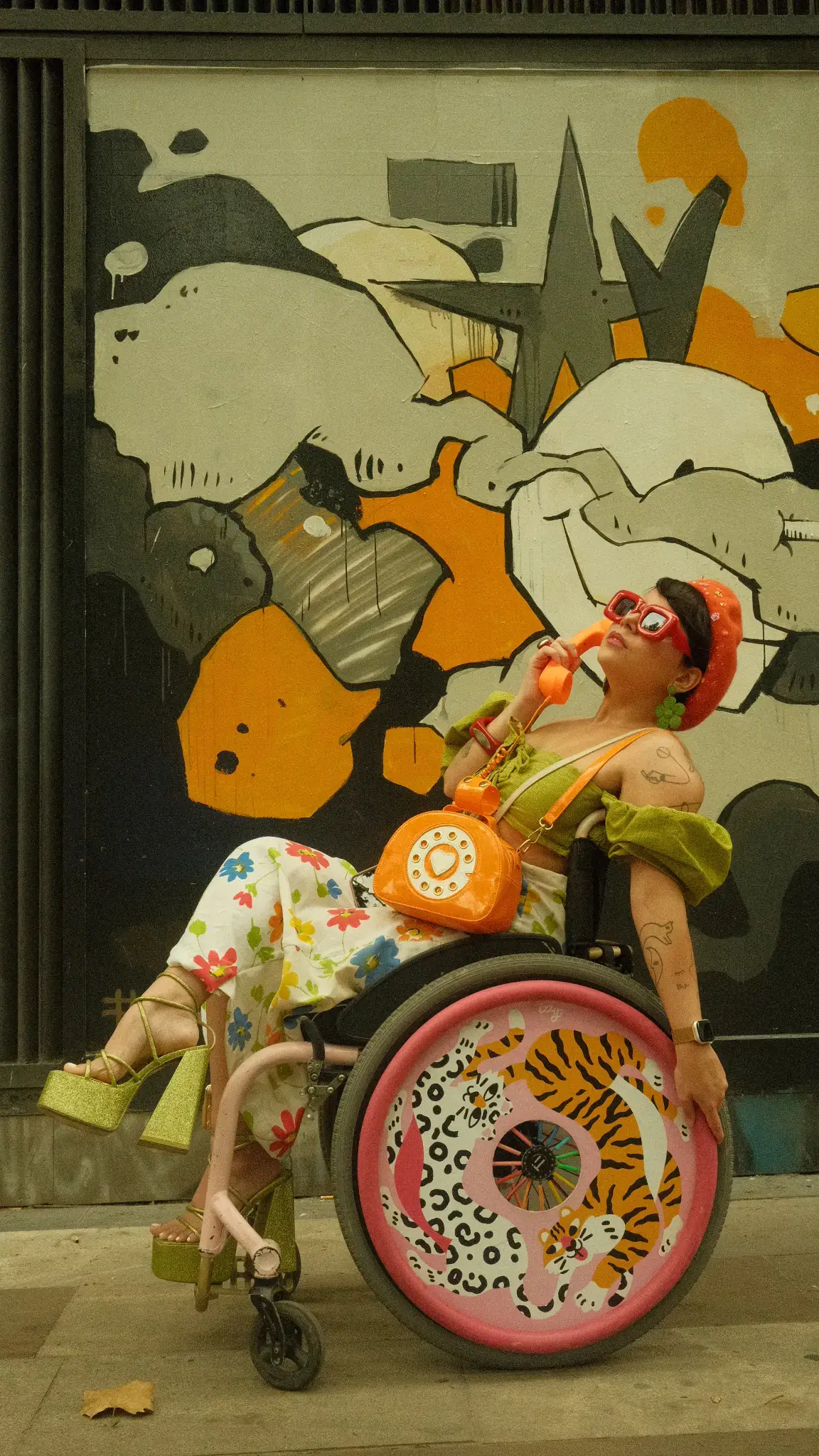
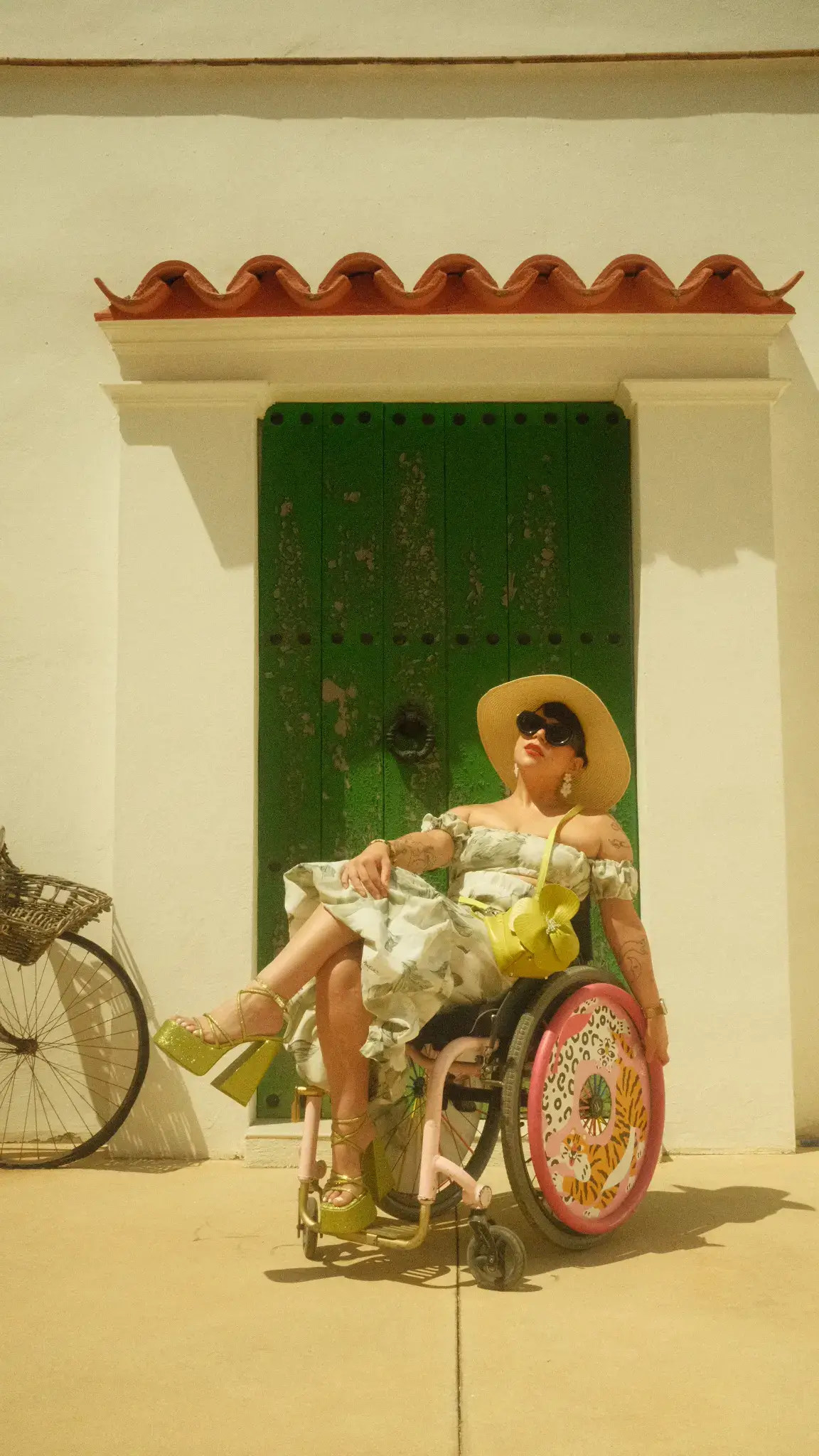
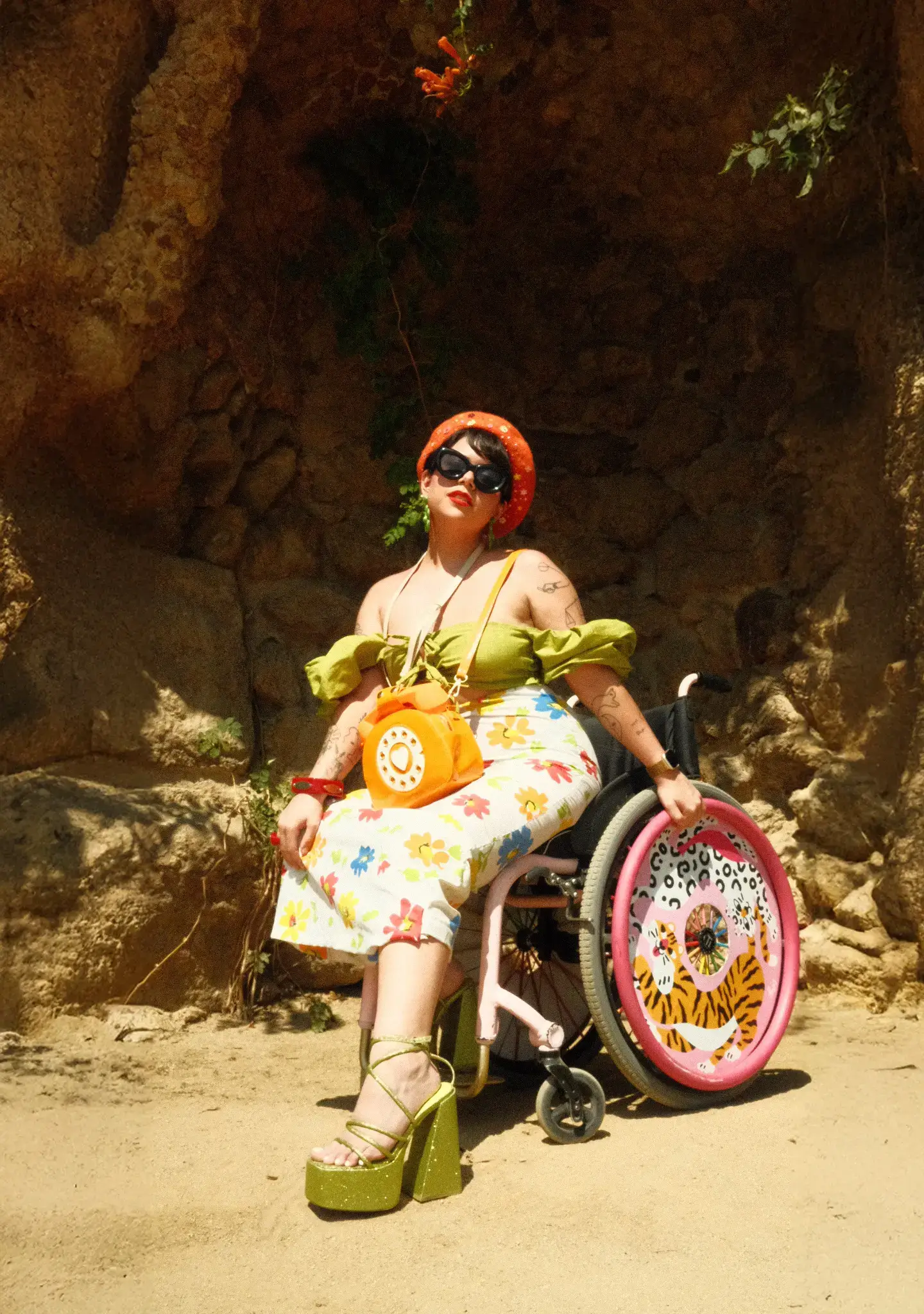
Samantha is a dopamine dresser who views pink as her power colour. Her chair, sanded and resprayed by her dad in high-gloss pink with glints of gold, is part of the outfit every time. One side of her closet reads like a flamingo flock and she styles herself every morning to a Britney Spears soundtrack until the vibe clicks.
One favourite hack: halter tops. Instead of hard-to-reach ties at the back of the neck, she re-engineers closures to the front, looping straps through polished O-rings. Beautiful, modern, easy.
She’s also a thrift-hack pro, scouting vintage sheets and curtains from linen aisles to turn into unique, sustainable couture and it works! Landfills breathe easier.
Her style counsel:
- Stop worshipping buttons and zippers, they’re just one option
- Stop saving outfits for special occasions, wear the flamenco ruffle set to grab groceries
- Demand flexibility. Waistbands, rises, and lengths should adapt to sitting and moving
- Brands should stop hiding adaptive design in side collections: show seated models, make accessibility part of the main line.
- Bodies change shape through hours. Garments should adapt without a tailor.
- Brands, take notes. Shoot seated models so customers can read fit honestly. Stop hiding adaptive features like a secret compartment. Place them in plain sight and let them look chic.
Material choice matters in Samantha’s world. Breathable cotton keeps heat intolerance at bay. Synthetics are avoided when possible and sustainability matters.
She’s a fan of Jacquemus Minimalism and Cult Gaia’s sculptural romance, labels she dreams of seeing embrace adaptive design as standard.
For beginners, her advice is simple: start small:
- O-rings, Velcro, elastic, ties, and a bit of hand stitching can transform how a garment works
- Front closures that welcome one-hand dressing, sleeve mobility, wheel-safe hems, and stretchy panels all change the game
- If magnets suit your body and devices, they’re great. If not, plenty of alternatives exist
- Creativity scales with practice
- Budgets stretch when you mine thrift aisles for sheets that become gowns
- Hardware stores and craft shops supply practical fixes
Small parts, huge freedom.
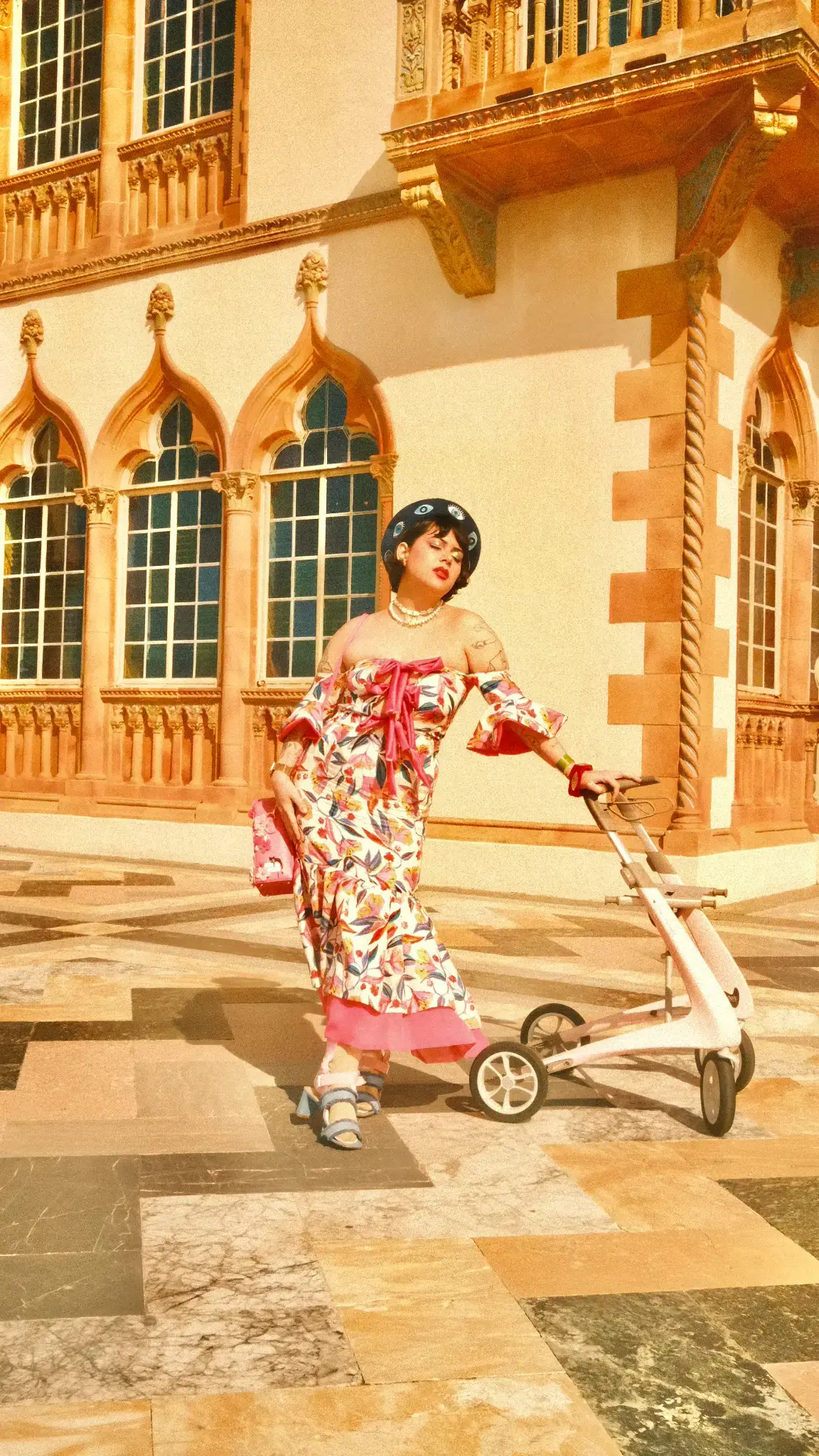
Her signature phrase: If people are going to stare, give them something iconic to look at. And she does: pink corsage tops, red skirts tied smartly, gold hoops flashing, a wheelchair painted like a limited-edition art piece. It’s a powerful statement: choice belongs to the wearer.
Samantha sews for herself and sometimes friends. A full label remains in the planning folder since scaling means labour, funding and environmental questions to consider. She wants to grow her online crowd, connect with folks who care about style and access in the same breath, see ramps built into runways and one day partner with a house ready to fold adaptive design into their main line. Until that call arrives, she keeps dressing in colour, testing fits on camera, sewing late, blasting Britney and posting wins.
Fashion belongs to everyone. Build what you need. Celebrate what you love. Wear it today.
Follow Samantha on Instagram: @disabledicon