Listen to this Article
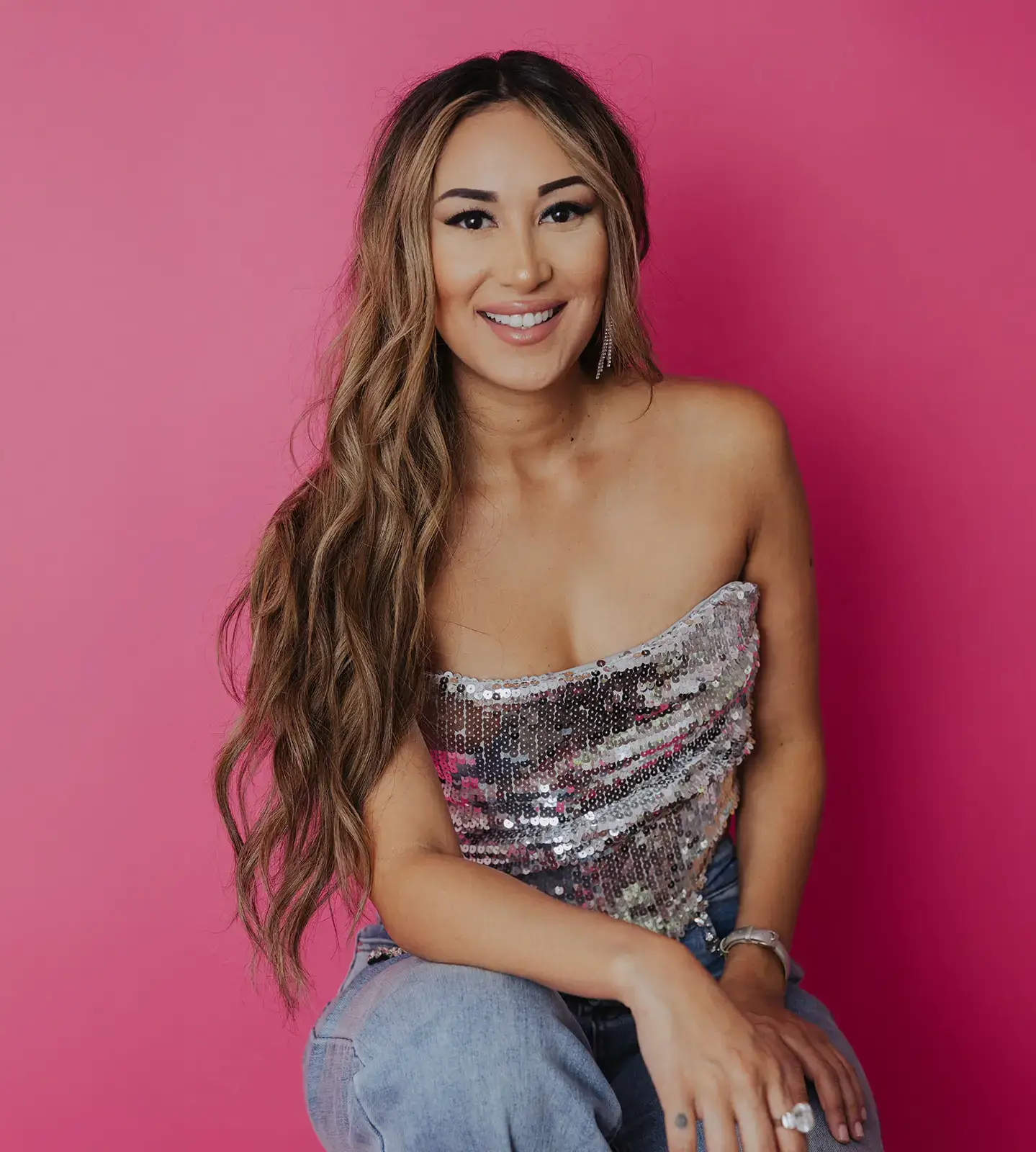
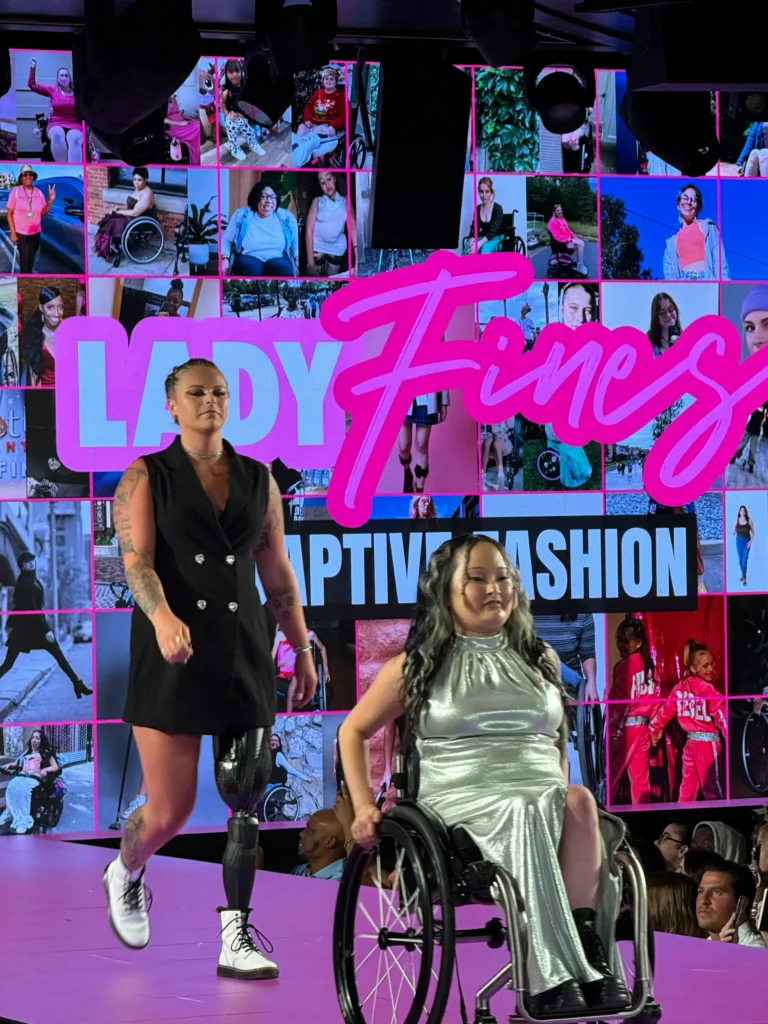
At 6:30 a.m., while most of Tampa still sleeps, Lady Fines is wide awake, hunched over a glowing screen, designing in an iPad fashion app as she studies adaptive-feature notes from models she’s worked with. She flips between mood boards and digital templates, refining skirts with discreet clasps and tracksuits with hidden zippers. Two hours later she logs into an interview, voice soft but charged. She hasn’t slept. She has been busy dressing a world that fashion forgot.
Lady’s world did not start in a glossy studio or on a Paris runway. It started in psychology labs, hospital corridors and in the living rooms, schools, and community spaces where she first worked as a social worker. At 25, degree in hand, she supported individuals and families through counseling, crisis intervention, and connecting them to essential resources, meeting clients wherever they needed her to ensure their mental-health stability. But she soon realized her heart soaked up every story. She cared so deeply it hurt, and her parents kept saying the same thing: “You need to be in fashion.”
She was a Tampa girl though. This wasn’t New York or L.A., stacked with glamorous fashion schools on every corner. So she did what stylish girls with stubborn streaks do: she hunted down an internship at the Home Shopping Network (HSN) in Clearwater, driving two hours a day while completing a full-time online program with New York’s Fashion Institute of Technology. It was humbling and exhausting, but electric.
Inside those corporate offices, Lady fell for fashion buying. Numbers, margins, sell-through, but also fabrics, silhouettes, colour forecasts. Still, something itched in the back of her mind. During market research she kept scrolling past the same faces on campaigns and webpages. One slim, glossy template of “fashion girl,” copy-pasted across brands. Where were the models with prosthetics, wheelchairs, scars, ports, tremors?
At the same time, her aunt, a lifelong fashion inspiration, was diagnosed with stage 4 cancer. The woman who once dressed like every day needed a runway now wore simple pieces nurses could easily cut open for chemo ports. Getting dressed turned into a small battle. Lady watched her style shift from expressive to purely practical, and something in her snapped.
The data on her screen and the aunt in her life collided. A question landed hard: why are clothes that work with medical needs so drab? She started stalking the internet for cute pieces that could work with chemo, ports, braces, wheelchairs. The options she found were dull, clinical and greyed out. So she brought a proposal to the fashion company where she worked, complete with decks and strategy, adaptive fashion, inclusive models, and the real customers already scrolling their feeds. Leadership smiled, nodded, then said the words she still hears in meetings across the industry: “That’s not our customer.”
She didn’t hear it just once. After proposing adaptive fashion and inclusive representation to a couple of companies she worked for, the pattern became unmistakable. If she wanted this vision to exist, she would have to build it herself. So she made a choice most people wouldn’t dare: she stepped away from the corporate fashion world she had fought so hard to enter. She accepted a role on a product-development team developing hardware, not hemlines, simply to honor her non-compete and buy herself breathing room to build Lady Fines Adaptive Fashion in the background.
It was one of the hardest decisions she had ever made. Leaving her dream job as a buyer meant starting over, hunting for a “safe” non-compete role while quietly constructing a brand from scratch with no investors. Every paycheck, every hour, every ounce of savings went into the thing she knew the industry needed, even if it didn’t know it yet. She proudly created a label that treats disabled girls and women like the main character, not the afterthought.
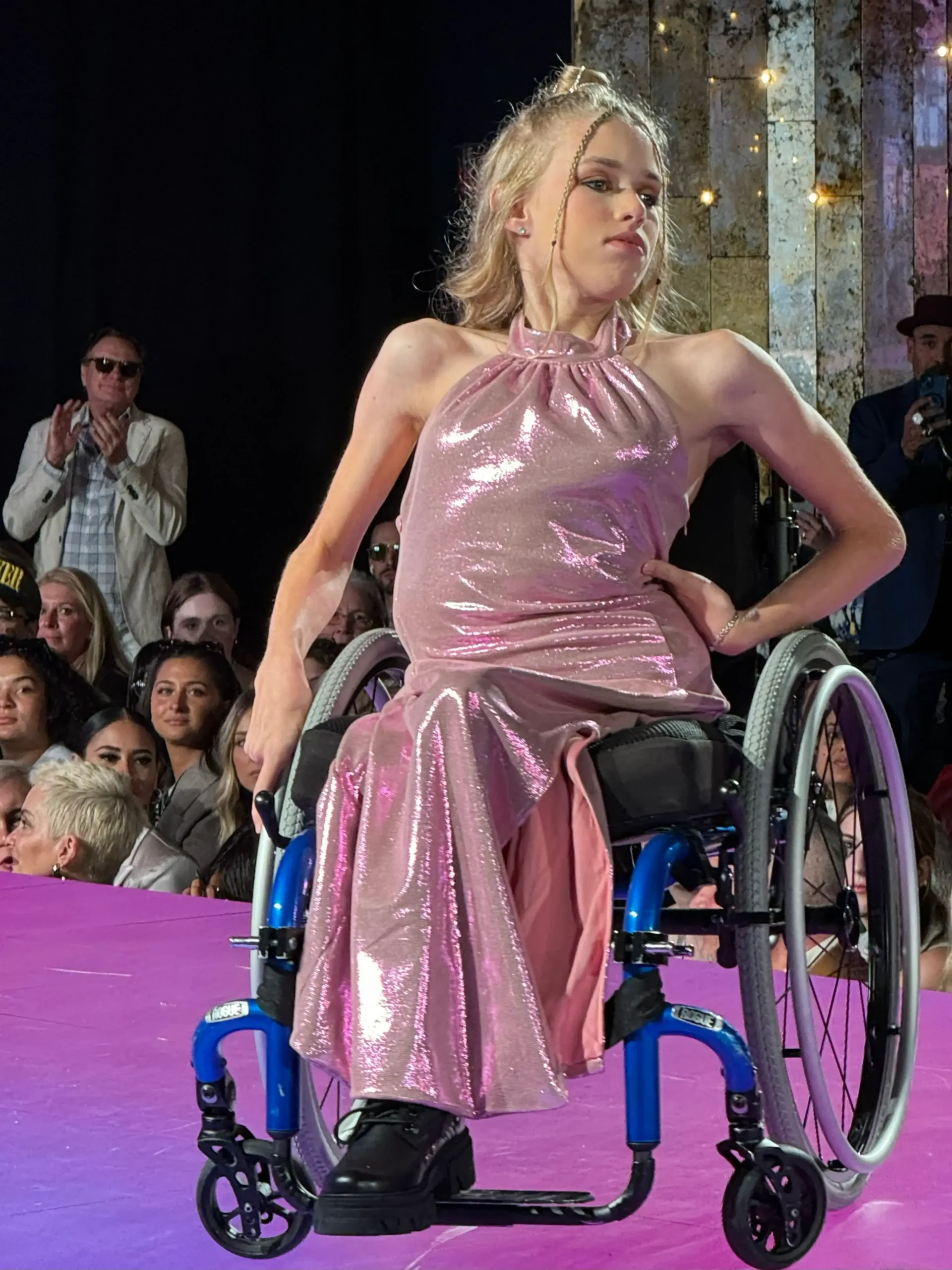
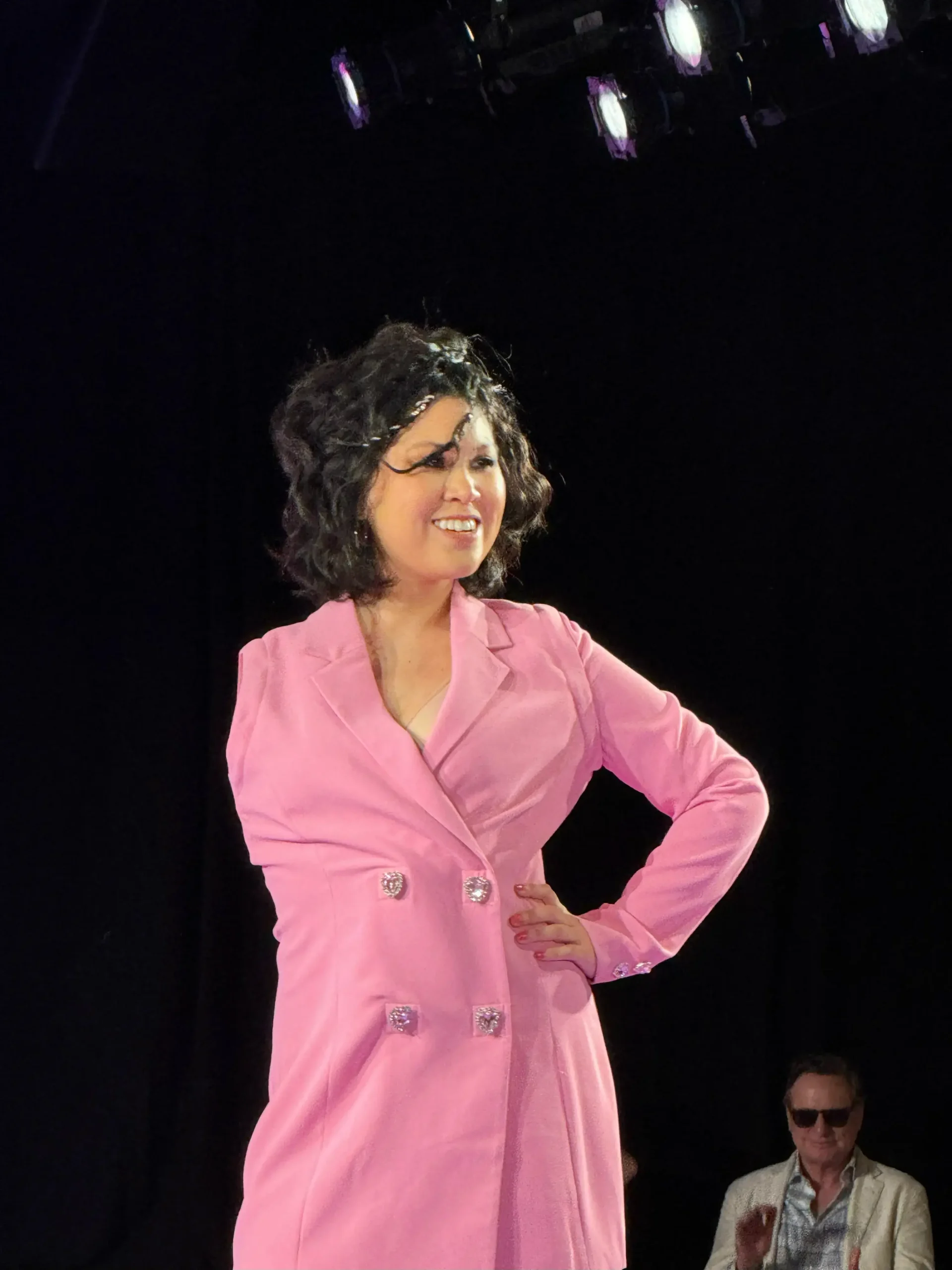
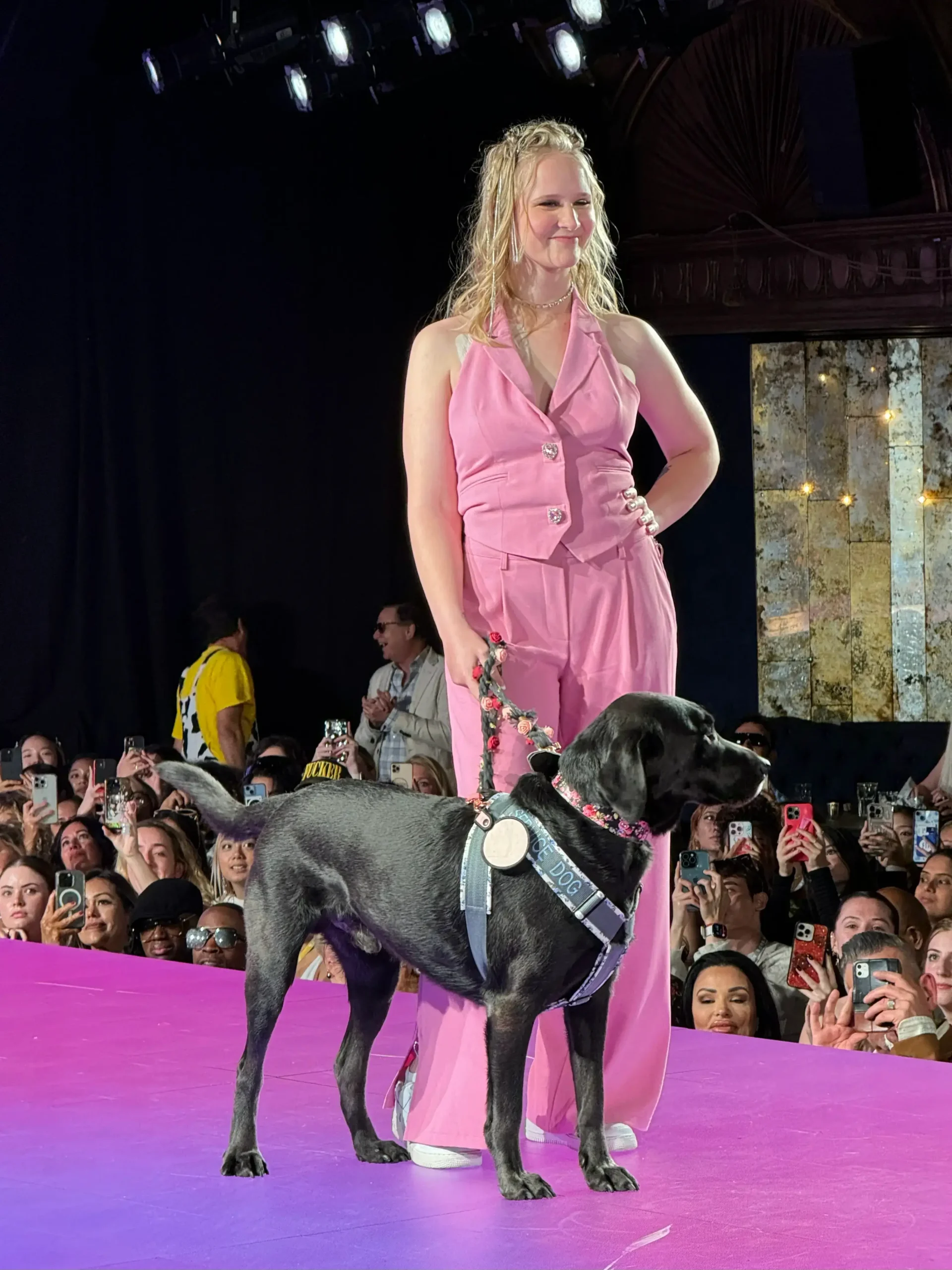
Her design process starts like any trend-savvy label. She watches what is hitting mood boards and screens. Barbie pink was surging, bows everywhere, girly details reclaiming power. Then she layers in reality. Who needs this piece? A seated customer with a spinal cord injury. An amputee who wrestles with tight leg openings. Someone with autism or Down syndrome who needs soft seams and no scratchy tag. A chronic illness warrior at chemo who wants easy port access without flashing an entire infusion room.
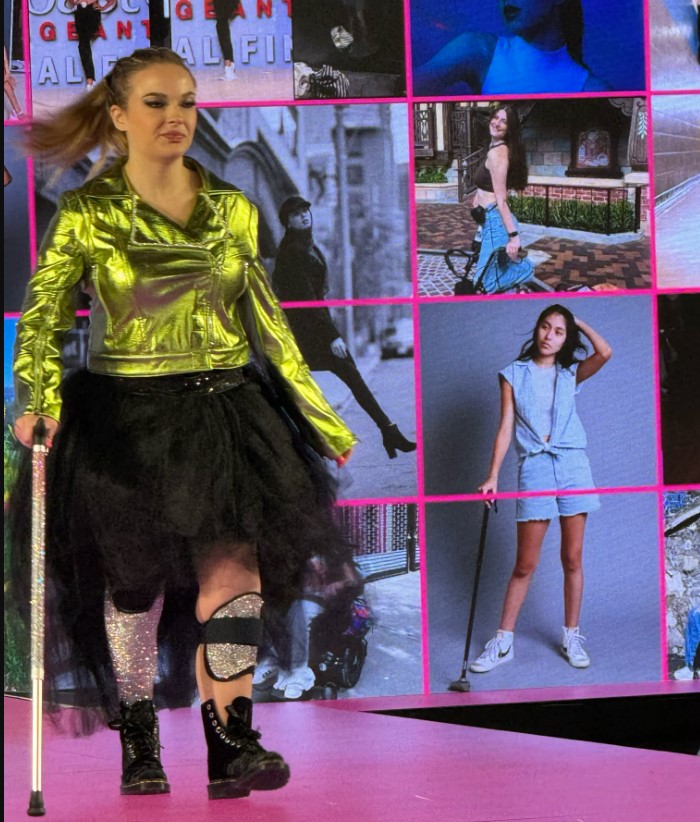
From there the clothes become little engineering projects disguised as cute outfits. Side zippers on pants that run right to the ankle so prosthetics slide through instead of getting stuck. Extra-wide leg openings that sit comfortably over braces. Tagless finishes and soft fabrics for sensory sensitivities. Magnetic closures that snap together with one hand for anyone with limited dexterity, paired with clear website warnings for those with pacemakers. Skirts with built-in shorts and a clasp at the crotch so a wheelchair user can manage the washroom without a balancing act.
That combination is the backbone of Lady Fines Adaptive Fashion: fashion with function woven into every seam. Of course, the industry noticed. A mega fast-fashion player slid into her inbox with talk of collaboration. Exciting! Huge reach with huge money, which is an easy yes for many designers . . . until the details arrived. There would be no samples for her to test on real bodies. Only photos, and no guarantee the models would be disabled. So, Lady walked away. Adaptive clothing, shot on non-disabled bodies with no fittings on actual users, felt empty. No cheque could compete with the girls who trust her to dress their daily lives.
Outside of the label, Lady runs Rebels with a Cause, a nonprofit that stretches her impact beyond closets. Through it, she and her team customize Lady Fines pieces when someone’s needs sit outside the standard pattern. They visit schools and speak to students who have never considered how hard it can be simply to pull on jeans when you live with chronic pain or paralysis. Local businesses that fail accessibility standards are approached and gentle but firm conversations are started. They are planning job fairs where companies sign on specifically to hire disabled talent and clothing donations are already happening year-round for anyone in need.
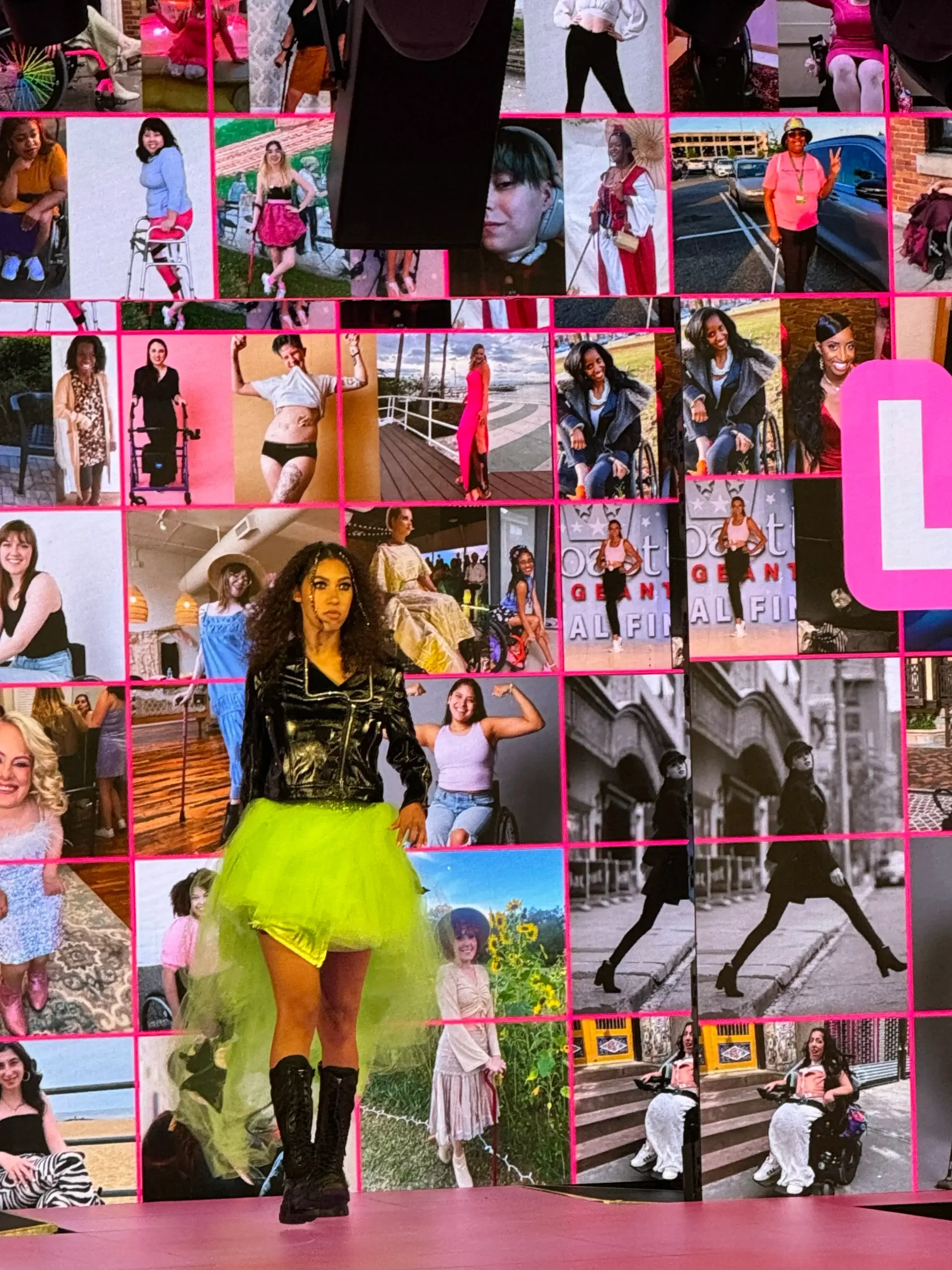
Her vision of the future feels like a glossy editorial world finally waking up. Visualize a Lady Fines flagship filled with mannequins that look like her community: seated, wearing braces, limbs missing, visible scars, radiating confidence. Clothing racks set at heights reachable from wheelchairs. Collections for teens, for thirty-somethings, for stylish aunties and grandmothers who want adaptive tailoring with grown-woman elegance.
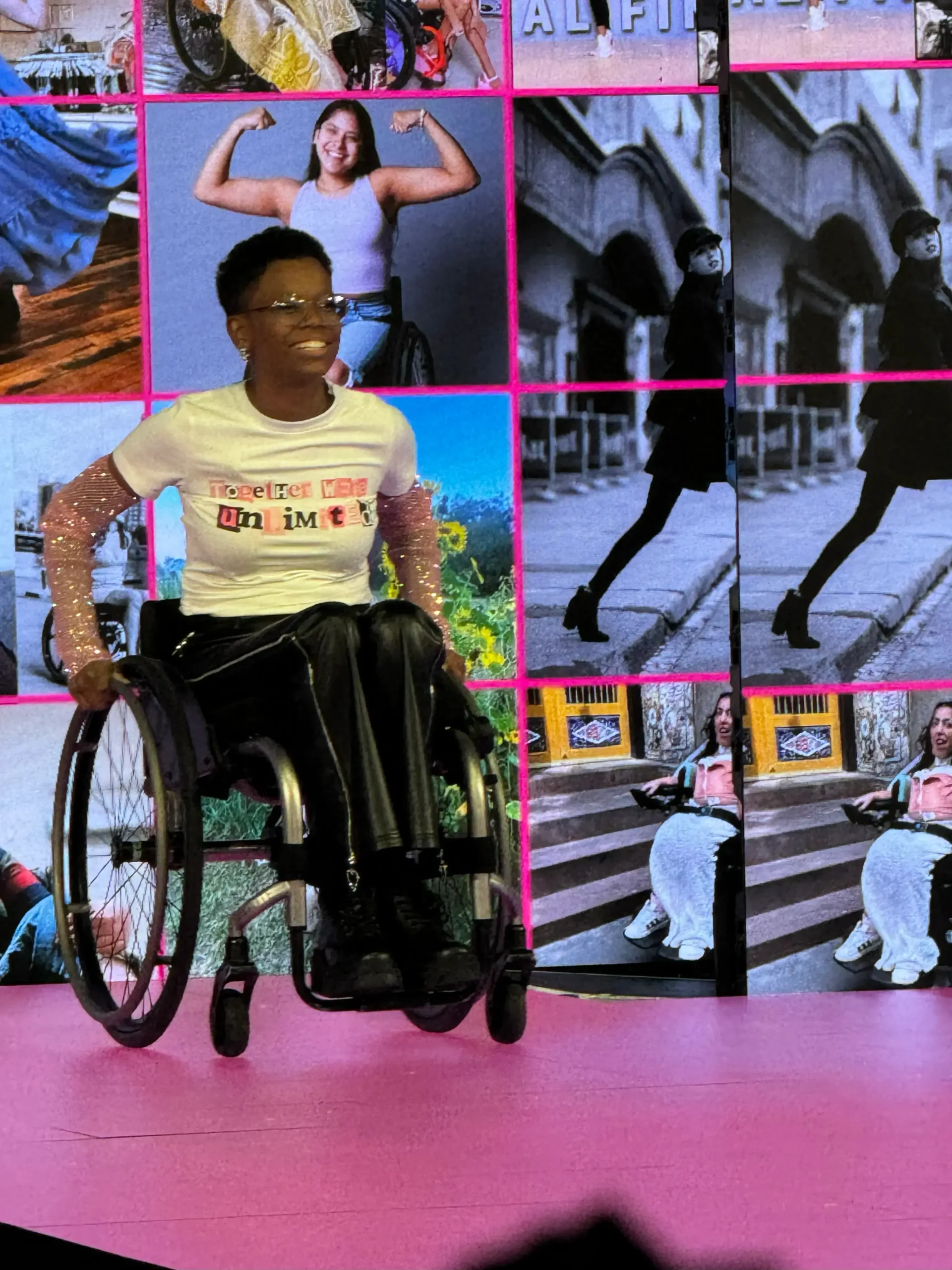
![A Black fashion model with short, dark hair and glasses stands proudly next to her silver manual wheelchair on a bright magenta runway. She is wearing a white t-shirt with the text "TOGETHER WE ARE UNLIMIT[ED]," high-waisted black faux leather pants, and sheer, bright pink mesh gloves speckled with glitter. She is looking down and adjusting her glasses. A man in sunglasses is visible clapping in the background audience.](https://melangeandco.com/wp-content/uploads/2025/12/IMG_3180-WEBP-768x1024.webp)
If Lady sounds optimistic, she has reasons. University students flood her inbox asking to feature Lady Fines in capstones and research projects. Gen Z fashion kids, disabled and non-disabled, are demanding representation that feels real. They do not want pity, they want to look cute.
That, in the end, might be Lady’s quiet revolution: not inspiration porn or tragic backstories. What she gives instead is a pink bow that snaps closed with a magnet, a tracksuit that makes chemo feel slightly less clinical and a skirt that lets you strut through a grocery aisle like it is a catwalk.
Lady Fines believes adaptive fashion can embody the same style and self-assurance as the confident it-girl on your vision board, and she designs every piece with that in mind.