
Listen to this Article
The story starts in a kid’s closet, not a Paris showroom. Mindy Scheier’s son Oliver was eight, tired of sweatpants and compromise. He walked in from school and said the sentence that flipped his mother’s life inside out. “Mom, I want to wear jeans like everybody else.”
It was a simple request but the impact was sharp. Mindy, a fashion designer with years in the industry, felt it like a punch. She knew clothing as art, status, self-expression. Her son, who has a rare form of muscular dystrophy, knew clothing as a daily obstacle. Buttons he could not close, zippers that would not cooperate and laces that refused to play nice. That night changed his closet and then the industry.
Mindy started on the floor with a pair of scissors, some denim and a kid who deserved better. If one little boy in sweatpants felt shut out, what did that say for the 1.8 billion people around the world who live with disability and still have to get dressed every morning?
Runway of Dreams was born from that question. Founded in 2014, the nonprofit sits right at the line where fashion fantasy meets real life function. The objective is crystal clear: Change how fashion and beauty see disabled consumers and pull them straight into the centre of the conversation, not as an afterthought or inspiration porn, but as clients with style, budgets and opinions.
When Mindy started pitching adaptive fashion, many big brands replied with a shrug. No one had done it yet, so why start now. Adaptive clothing was seen as niche, clinical, separate from glossy campaigns and front row glamour.
Then came 2016.
Tommy Hilfiger partnered with Runway of Dreams and launched the first adaptive collection from a global mainstream label. Hidden magnets, adjusted openings, thoughtful cuts that actually work seated or standing. The move cracked the door wide open. In fashion years, the shift since then feels fast. Mindy can now list roughly a dozen mainstream brands that offer adaptive pieces or in-store adaptive tailoring, from department stores to luxury retailers. Disabled models are appearing in campaigns and on runways in New York and beyond.
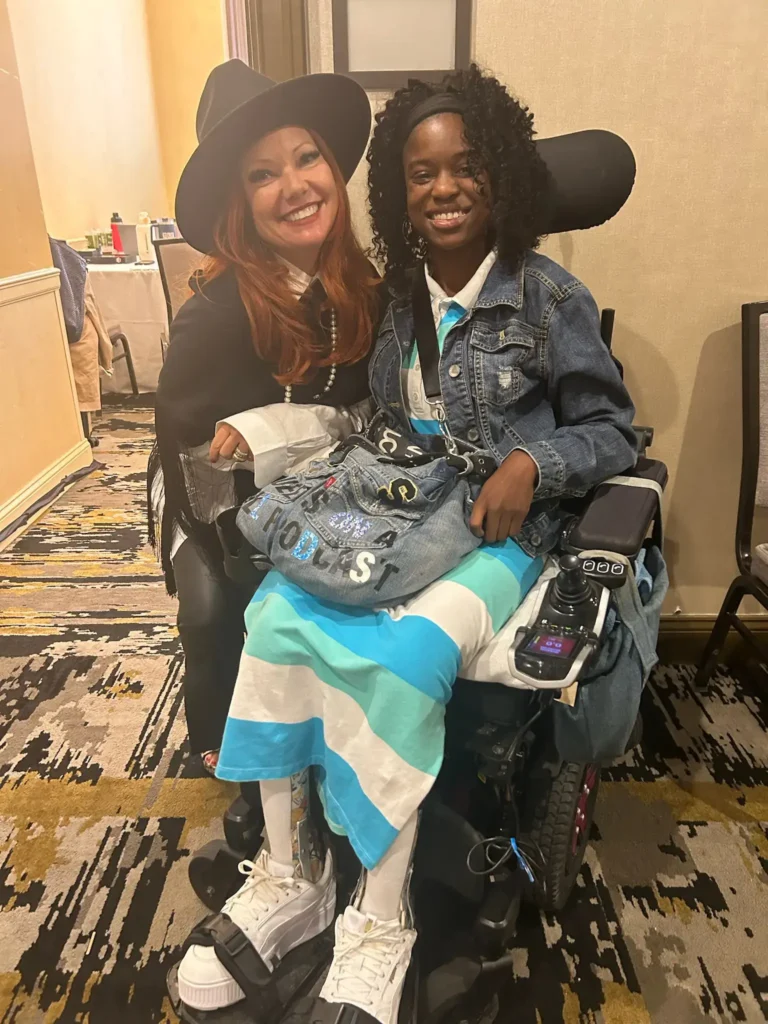
The vibe inside youth culture is pushing that change. Millennial and Gen Z shoppers scan brands for inclusion the way older generations scanned labels for fabric content. To them, diversity, disability and representation sit in the same basket as sustainability and ethics. Non-negotiable.
Still, Mindy knew visibility had to go further. So she built a stage.
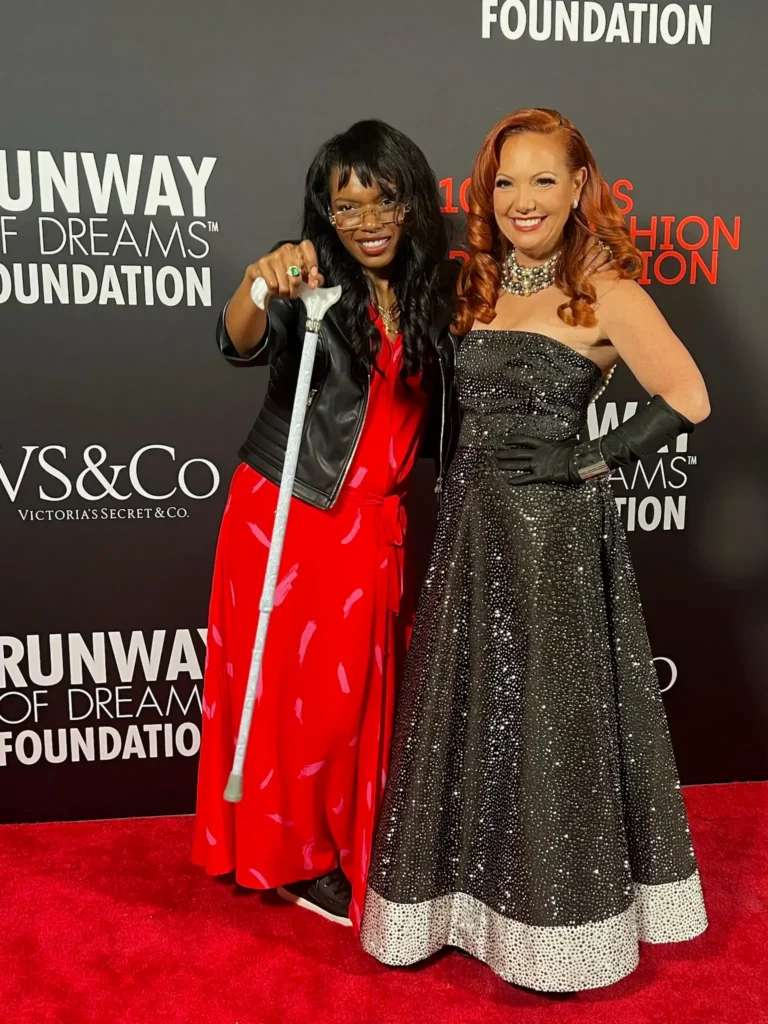
Runway of Dreams fashion shows during New York Fashion Week look like high gloss fever dreams, only with better casting. Every model has a disability. Every look on that runway is adaptive. Target, Kohl’s, JCPenney, Steve Madden, Neiman Marcus and others send pieces down the catwalk, proving that adaptive design can live right beside trend reports and seasonal drops. In 2022, Forbes ranked the show among the top events of New York Fashion Week, placing this disability-forward production shoulder to shoulder with household names.
One of Mindy’s favourite milestones floated in on angel wings and lace. Victoria’s Secret chose to debut its adaptive intimates on the Runway of Dreams catwalk in 2023 instead of its own stage. The collection includes a magnetic front-closure bra with sensory-friendly fabric and straps that adjust forward, not behind the back. It looks like lingerie and behaves like liberation. Women who live with disability can fasten it themselves or have caregivers handle it more easily. At the same time, any woman who has ever wrestled with hook-and-eye closures sees the quiet brilliance.
That is where adaptive design slides into universal design. Created in consultation with disabled women, yet appealing far beyond that audience. It’s fashion that refuses to hide function.
To make sure brands do that work with real community input, Mindy built a second enterprise in 2019, Gamut Management. If Runway of Dreams answers the “why,” Gamut focuses on the “how.” It is both consulting firm and talent community, representing disabled people and connecting them with companies that want to design, cast, market and test in authentic ways.
When a brand calls, Gamut forms focus groups that are intentionally mixed. Wheelchair users, limb different folks, neurodivergent talent, little people, people with Down syndrome. Different lived experiences, one fitting room. The design teams listen, learn and co-create. The aim is not perfection for every body but clothing that works for far more bodies than before.
From that process came the Gamut Seal of Approval, launched in 2022. Think of it as a stamp right beside a brand logo that quietly says, disabled people helped shape this. The product has been vetted by community members and professionals who understand both function and dignity. Adidas was among the first partners, placing the seal on an adaptive sock that rethinks something as simple as getting dressed feet first.
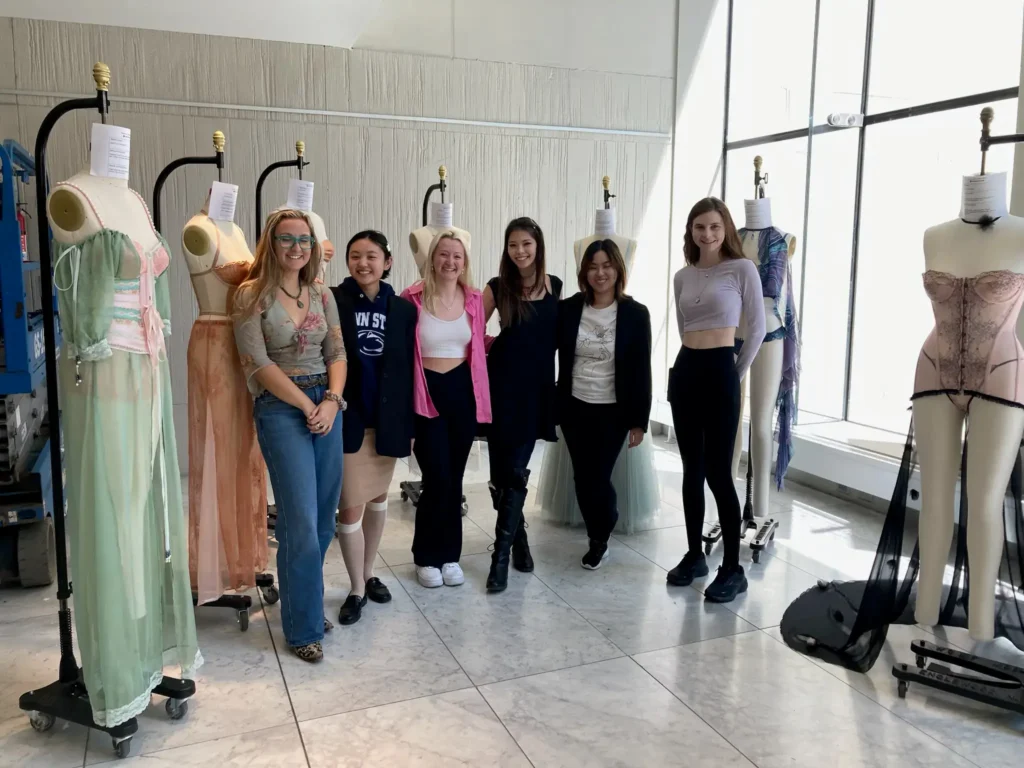
Runway of Dreams grooms big labels but the foundation also runs college clubs at over 20 universities. Students with and without disabilities stage their own adaptive runway shows on campus, cast their peers and pull disability fashion straight into lecture halls, cafeterias and dorm scroll feeds. For many young designers, it is their first time cutting a pattern while considering seated fit, sensory needs or limited dexterity.
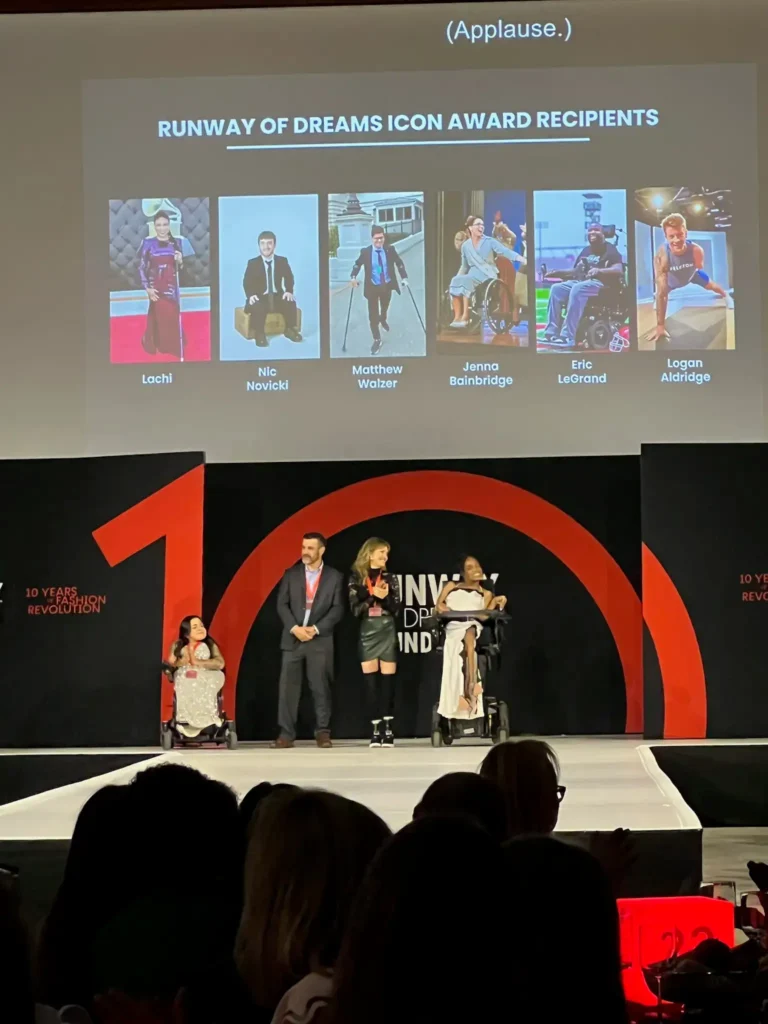
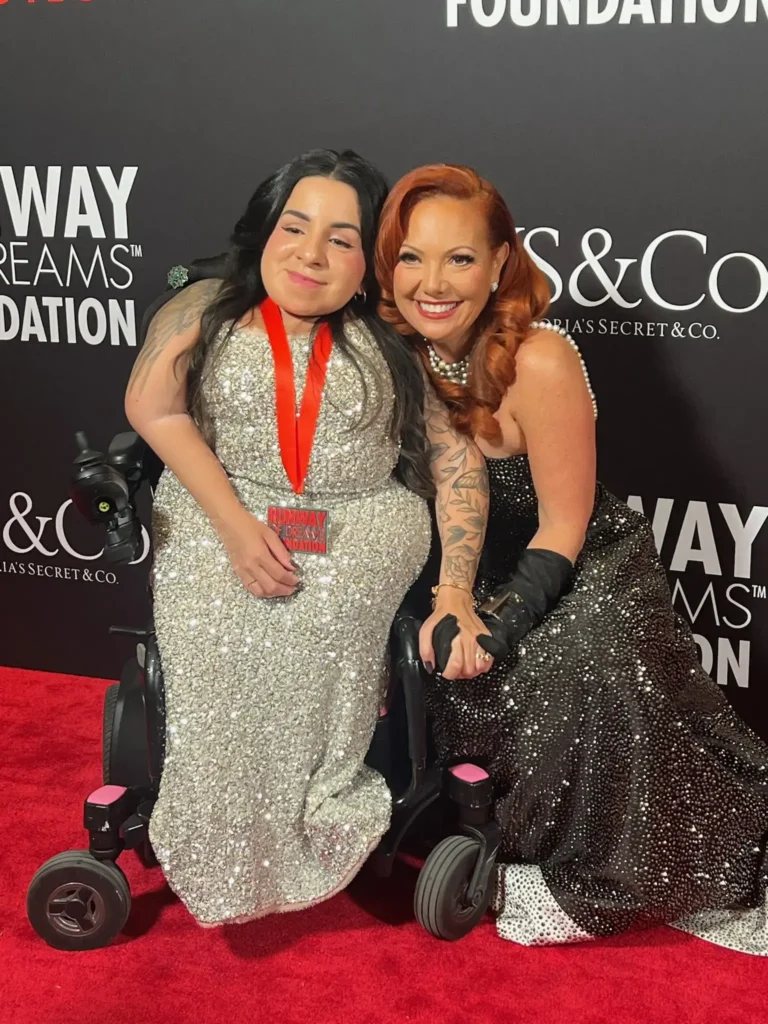
That surge of new talent gained even more force when the organization stepped into a new phase. In April, Runway of Dreams and Gamut Management were acquired by the FedCap Group, a move that expands their reach with stronger infrastructure, broader networks and access to far bigger audiences at a time when DEI initiatives face pressure and fashion brands grapple with economic shifts. The acquisition marks a decisive next chapter and while that unfolds, the next generation is already taking shape.
That focus comes into sharp view through the foundation’s internship program, now in its seventh year and built to immerse young creatives in the inner workings of adaptive fashion. Students learn disability culture, product challenges and industry gaps across roles like design, marketing, finance, PR and product development. This year marked a milestone. Sixty percent of interns identified as disabled, a shift that Mindy considers essential because so many disabled students struggle to find accessible placements. Interns collaborated, listened to brand leaders, learned the craft of inclusion and spent the whole summer on a pitch challenge. Teams select a sportswear company, design a virtual adaptive product, build marketing plans and prepare detailed budgets. It’s a training ground for a future where inclusion is baked into the job description.
For Mindy, the professional and the personal blur in the best way. Oliver is now 19 and recently finished his first year of college. He dresses himself with far greater independence than anyone predicted a decade ago. There is no cure for his form of muscular dystrophy. She will never control that. What she can influence is his daily life, his confidence, the way he walks or wheels into a room wearing something that feels like him.
When she speaks to emerging designers, her message lands with the clarity of a runway spotlight. Just because clothing has been built one way since the 13th century, when buttons and buttonholes arrived, does not mean that is the rule forever. Innovation plus design can reshape the closet. Think magnets, side openings, higher back rises for seated wearers and fabrics that respect fluctuating temperature and sensory needs.
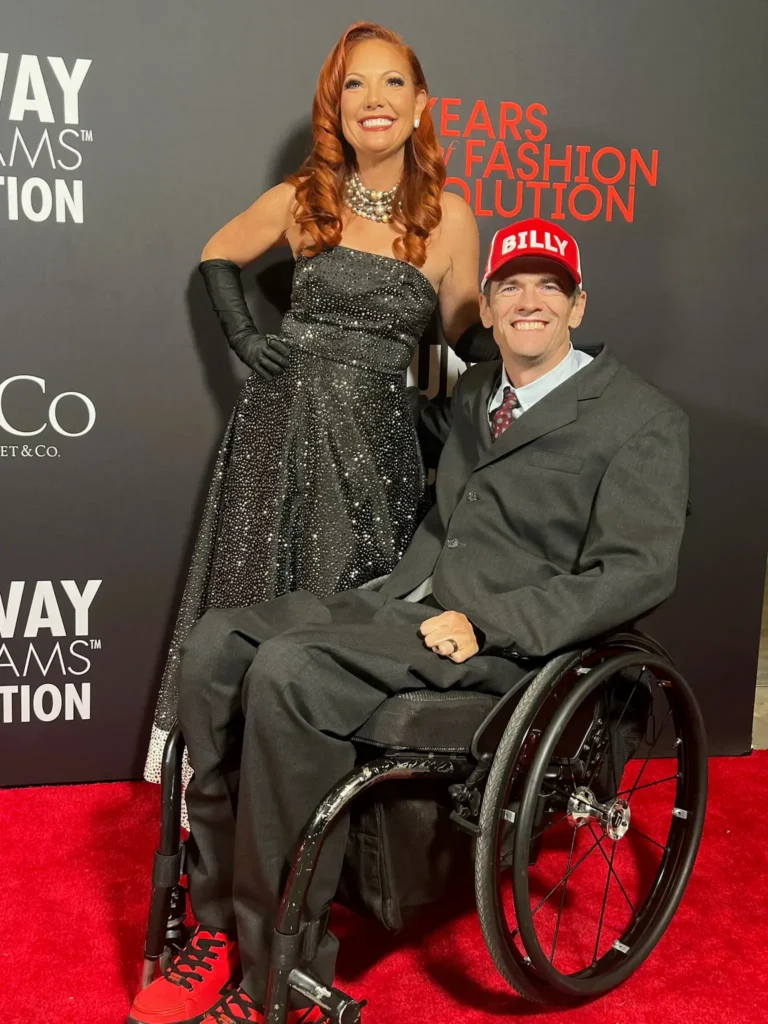
And when a pitch gets turned down, she refuses to call it failure. To Mindy, a “no” is information. Information leads to knowledge and knowledge fuels power. That mindset is stitched into every show, every focus group and every altered hem.
Adaptive fashion should not be considered a side category. It is fashion, full stop. Sequins, denim, lingerie, sneakers and socks, reimagined through minds that know what it feels like when the world is not built with you in mind.
Mindy Scheier is not waiting for permission. She is backstage, headset on, cueing the lights while models with disability roll, walk, crutch and strut under the cameras, proving something very simple: When everyone gets dressed on their own terms, the whole industry looks better.