
Listen to this Article
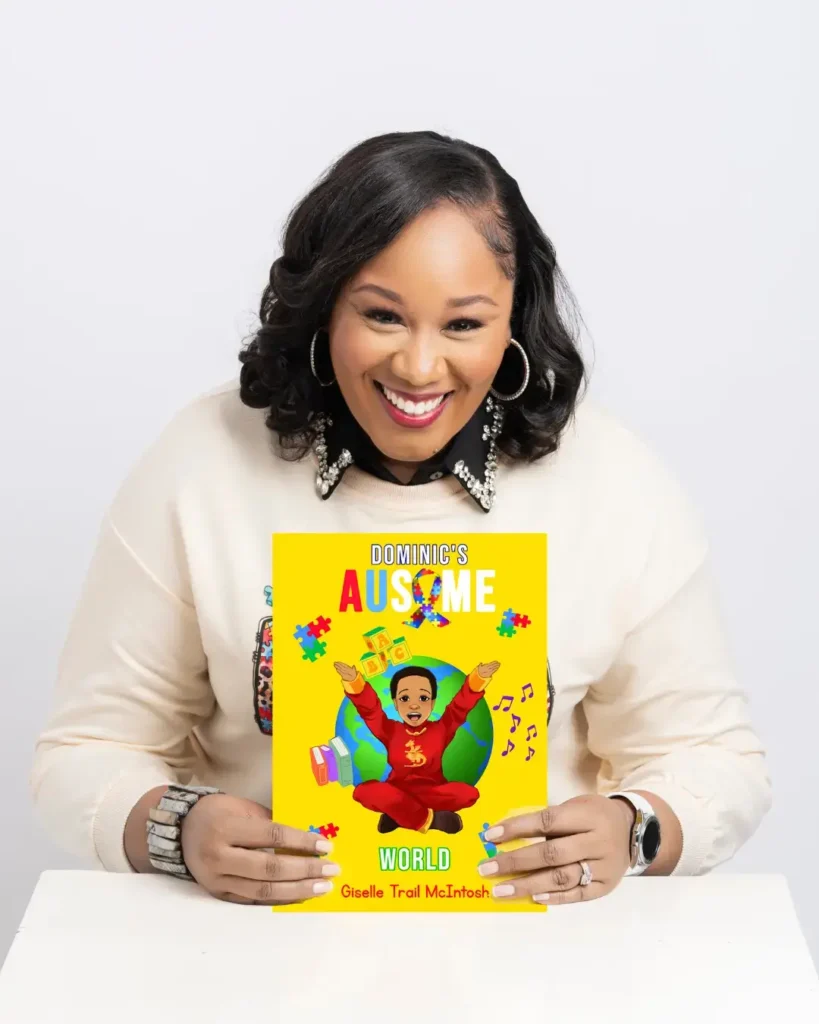
Giselle Trail McIntosh’s children’s book about her son begins with sensation: the world is loud, grass feels good under bare feet, certain smells are comforting while some sounds are too much. Through simple language and illustration, the book invites the reader into the sensory landscape of a young autistic child named Dominic.
Based in Jamaica, McIntosh says the book was never meant to explain autism in clinical terms. It was written to show how her son experiences the world.
The idea came to her during her first extended time away from Dominic. She was returning from an anniversary trip and found herself missing him deeply. Dominic does not engage easily through screens, so distance felt especially heavy. While imagining their reunion and the routines they would return to, she found herself slipping into his perspective. What began as a poem slowly became a story told through his eyes.
The book describes textures, sounds, smells, and movement. It speaks about how the world can feel overwhelming, but also full of joy. Dominic comes alive when his feet touch the grass. He loves the smell of lavender and water. Loud cars are uncomfortable. Shapes and colours hold his attention. The book does not ask the reader to label these preferences. It simply presents them as part of who he is.
That was intentional. Autistic people, she explains, are often treated as though their preferences are problems to be fixed rather than traits to be understood. In her view, a fixation is not so different from anyone else’s strong likes or dislikes. She uses herself as an example. She loves the colour purple and gravitates toward it without apology. That does not make her strange. It makes her human.
At the end of the book, Dominic introduces himself by name. The final pages emphasize that autism is not who he is. What matters is his heart, his curiosity, and his capacity for joy. Her hope was that readers, especially adults, would come away with a simple understanding: A diagnosis does not define a person.
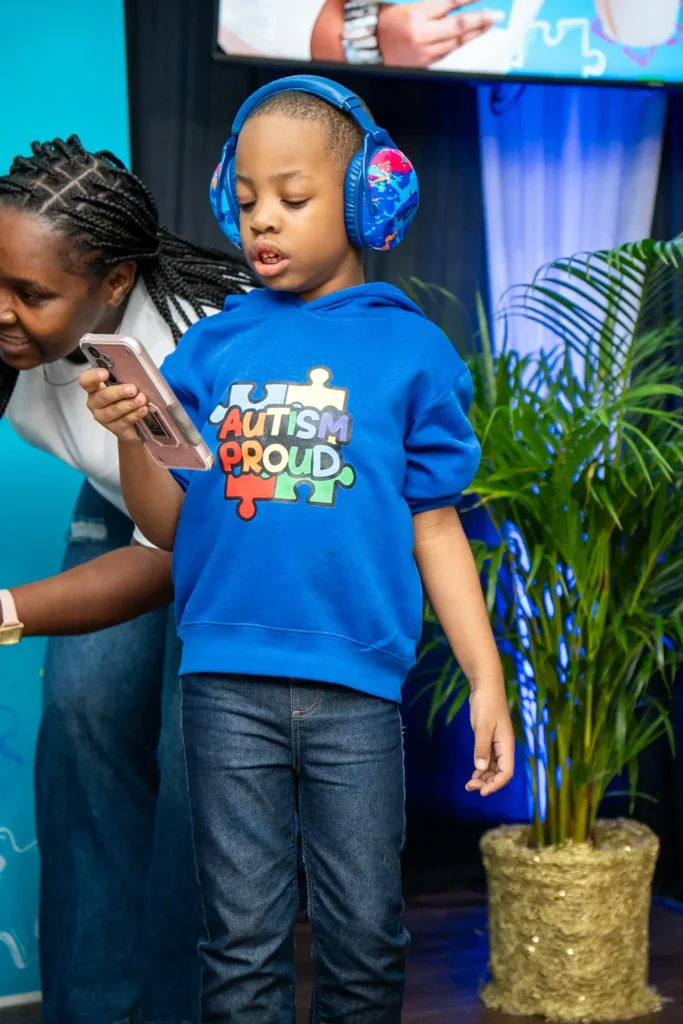
In Jamaica, next steps in the autism assessment process often involve long waits. McIntosh recalls being placed on wait lists that stretched months or even a year. Early appointments were confusing and rushed. Some experiences even felt dismissive. At one point, after a wait of more than two hours, Dominic was assessed while tired and hungry, asked to stand, jump, and respond to commands. McIntosh says the process was not clearly explained and felt insensitive.
While waiting for formal assessments, daily life continued. Dominic was a pandemic baby, and McIntosh was working from home. A doctor recommended enrolling him in early childhood education for socialization. Even this step required advocacy. When centres heard he was suspected to be autistic, responses sometimes paused. Staff questioned whether they were equipped to support him.
Eventually, Dominic was placed in a centre that approached children without labels. McIntosh remembers being told they simply saw children as children. That philosophy mattered. Still, as Dominic grew, it became clear that he needed more individual support than the setting could consistently provide. He often returned home with uneaten food and unmet needs, not from neglect, but from systems stretched thin.
Later, a facilitator observing Dominic said she did not need a diagnosis to know he was autistic. Support then began based on observation and understanding rather than paperwork. This approach aligned with what McIntosh hoped for. Help that responded to the child in front of them.
Accessing appropriate support also brought significant financial strain. Costs rose sharply as Dominic’s needs became clearer. On average it costs JMD 200,000 monthly to cater to the speech, occupational and behavioural therapy needs of an autistic child. This does not include food, medical or aftercare expenses. Insurance coverage for autism is capped annually, and parents are left on their own to “foot the costs” of these services for the majority of the year as the amount is quickly exhausted. McIntosh says this cost constraint is experienced among autism families across Jamaica, many of whom believe greater financial assistance and more comprehensive insurance coverage are needed from the government and health sector, as autism is a lifelong disability that places a significant and ongoing financial burden on households. When asked what happens to those who cannot afford this, she answers plainly. They fall through the cracks.

The experiences that shaped McIntosh as a parent also shaped her advocacy. While waiting for services, she searched for information and community. Outside of April’s Autism Awareness Month and World Autism Day, she found very little locally. Conversations appear briefly in April and then fade.
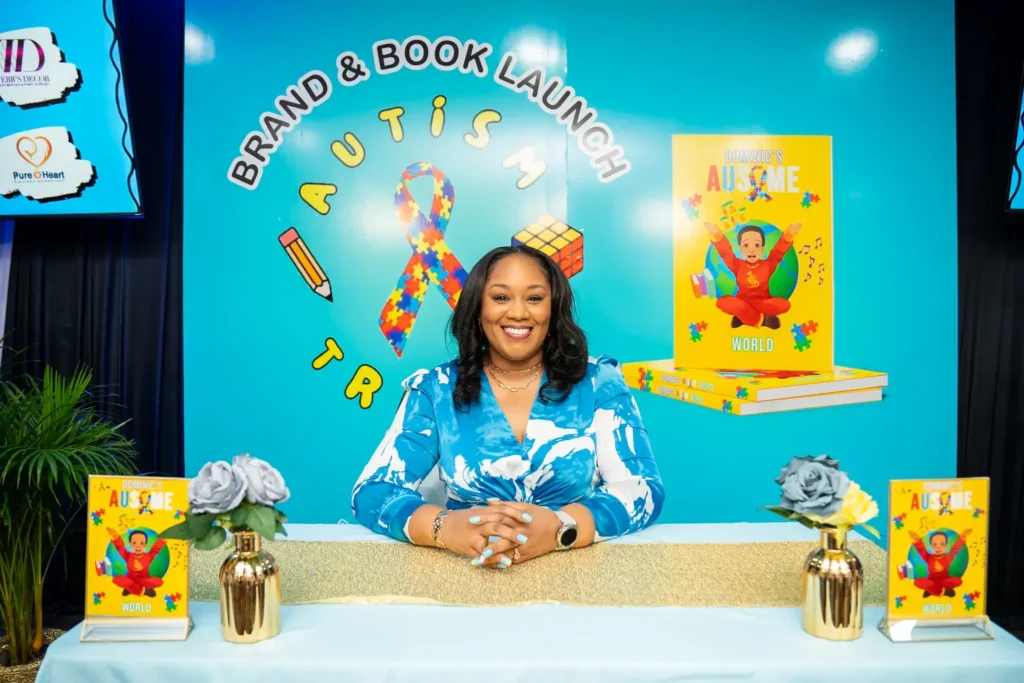
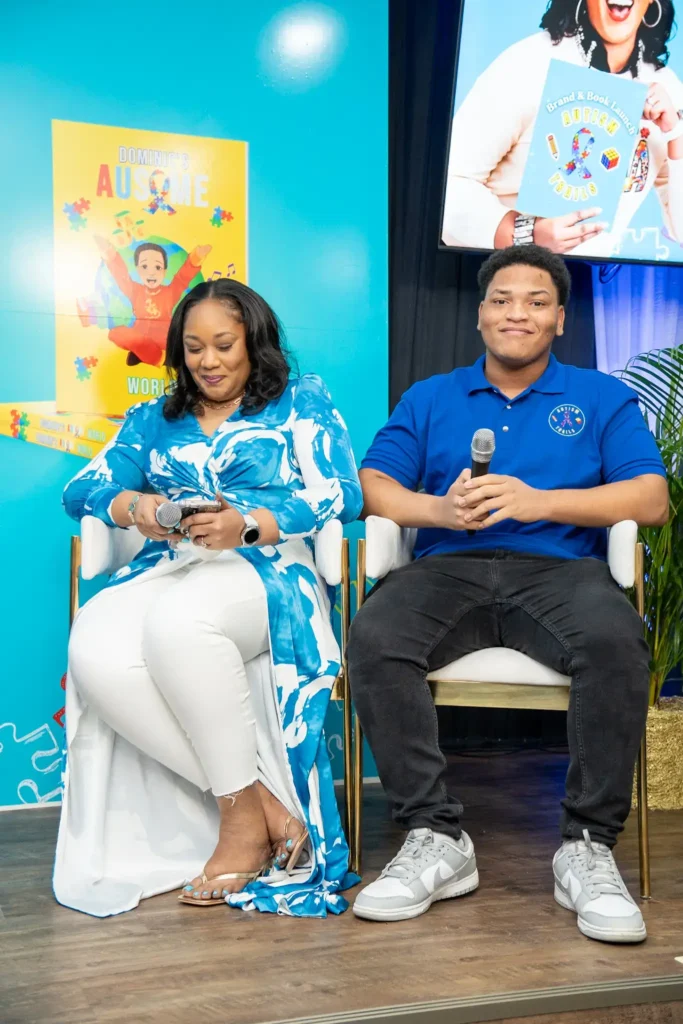
Autism Trails was created to keep those conversations going year-round. The platform launched on social media in April 2024 and expanded into a tangible, formal brand on January 31, 2026. Language sits at the centre of that work, with McIntosh openly challenging terms like “special needs,” which she says frame difference as deficiency. “Additional needs” is the language she prefers. When people are corrected, many respond with openness and apology, often unaware of the impact of the terms they use. The response has included encouragement for speaking openly in a culture where disability is sometimes hidden out of fear or shame.
McIntosh believes awareness in Jamaica is improving, but she sees gaps, especially around invisible disabilities. Conditions like autism and ADHD are often misunderstood or dismissed. Children are labelled rather than supported. She sees her work as an invitation to pause and learn instead.
The reception to Autism Trails has been positive. McIntosh has appeared on local television and radio, and she has been invited into churches to speak with Sunday School teams. She points out that faith spaces, like churches, are not always equipped with the skillset or knowledge to welcome autistic children. When families feel unsupported, they stop attending. Inclusion, she says, requires intention.
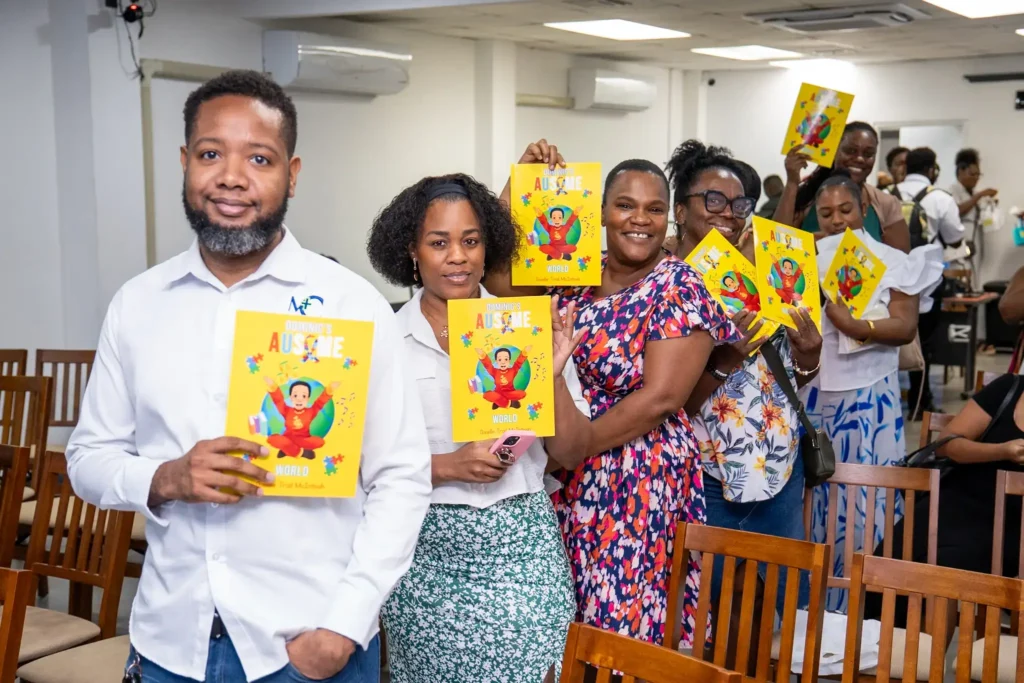
Her children’s book, Dominic’s Ausome World, is now available publicly, and she hopes it will be used in early childhood education settings. She believes it can help shape understanding early, before assumptions harden. It is written for children, but not only for them. Adults who carry uncertainty or discomfort around autism may find clarity in its simplicity.
McIntosh’s hope for Dominic is not abstract. She wants him to have space to be himself. To hum, jump, spin, or walk on his toes without being corrected or judged, to exist freely in a world that often asks autistic people to adapt without adapting in return. For Jamaica, other Caribbean islands, and communities beyond the region, she wants systems that do more than acknowledge autism once a year. She wants support that lasts long enough to change a child’s life, and a culture that makes room, not just in April, but every day.
The book ends by inviting the reader to explore Dominic’s world with him. McIntosh says that invitation extends beyond the page. Understanding, she believes, begins when people are willing to slow down, observe, and listen.
Connect with Giselle McIntosh and Autism Trails: