
Listen to this Article

For Jackie Silver, wellness does not begin with a plan. It begins with a question: what is actually possible today?
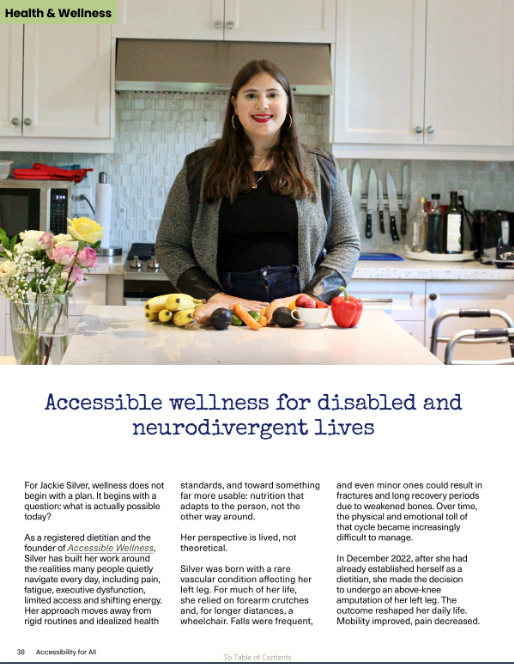
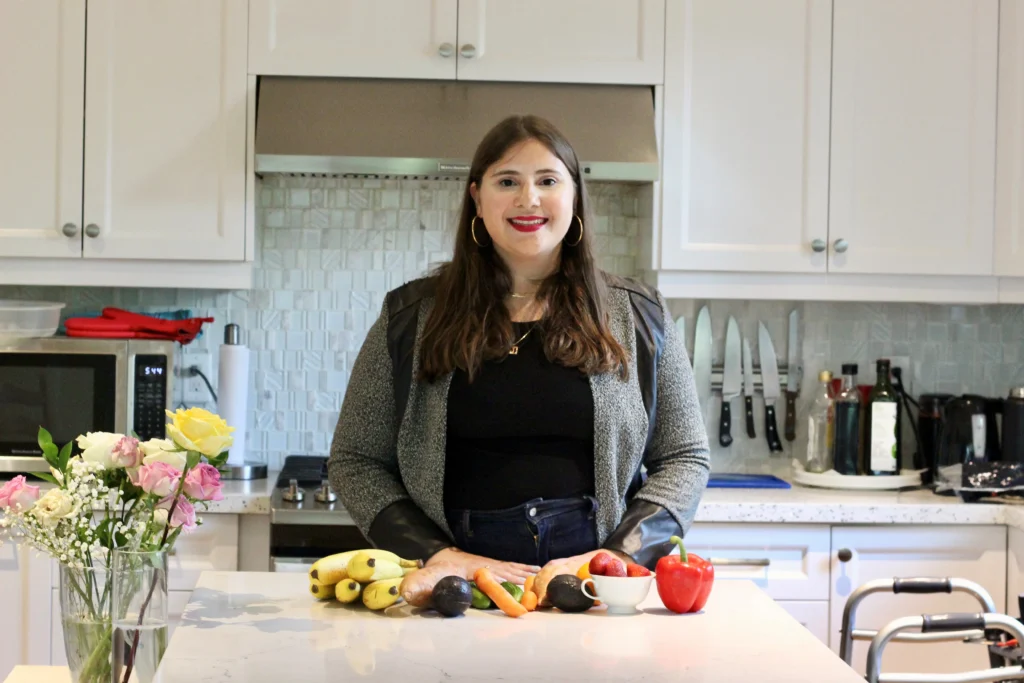
As a registered dietitian and the founder of Accessible Wellness, Silver has built her work around the realities many people quietly navigate every day, including pain, fatigue, executive dysfunction, limited access and shifting energy. Her approach moves away from rigid routines and idealized health standards, and toward something far more usable: nutrition that adapts to the person, not the other way around.
Her perspective is lived, not theoretical.
Silver was born with a rare vascular condition affecting her left leg. For much of her life, she relied on forearm crutches and, for longer distances, a wheelchair. Falls were frequent, and even minor ones could result in fractures and long recovery periods due to weakened bones. Over time, the physical and emotional toll of that cycle became increasingly difficult to manage.
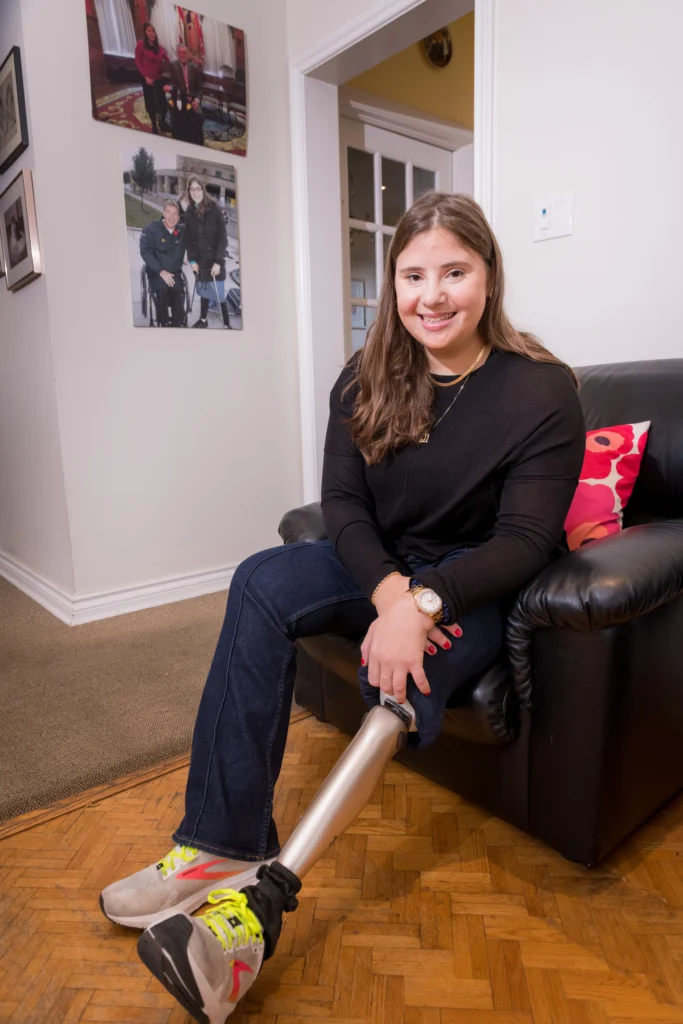
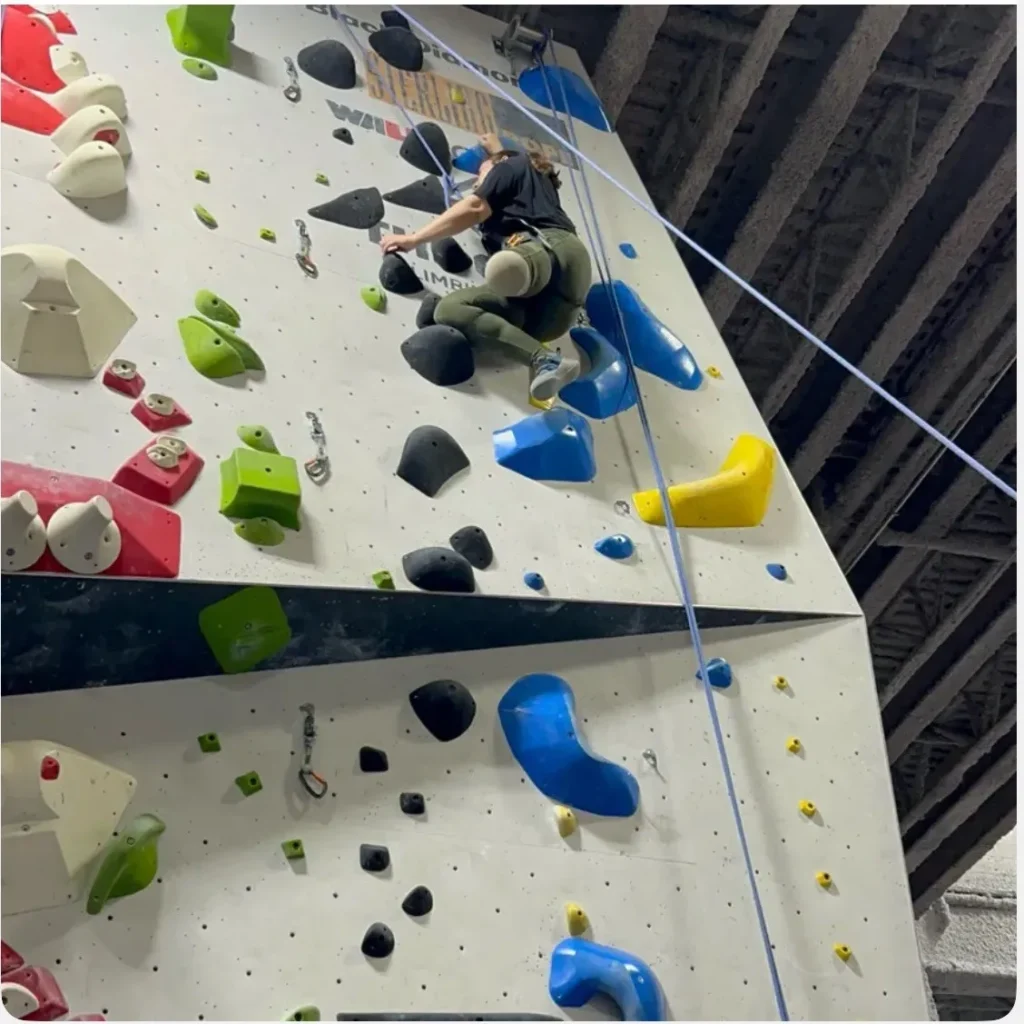
In December 2022, after she had already established herself as a dietitian, she made the decision to undergo an above-knee amputation of her left leg. The outcome reshaped her daily life. Mobility improved, pain decreased. Activities that once felt out of reach became part of her routine. She now uses a prosthesis, relies less on her wheelchair and has incorporated swimming, Pilates and adaptive rock climbing into her life. Just as significant has been the shift in independence and confidence.
That experience sharpened something that had already drawn her to health care in the first place: a belief that wellness should support how people actually live.
Silver chose nutrition as a career path in part because of its flexibility. She was interested in health, movement and food, but also in the ability to shape her work over time. After completing her master’s degree at Toronto Metropolitan University in early 2020, she entered a job market that had slowed dramatically. Rather than wait, she started her own practice, and what began as a general nutrition service quickly evolved.
During a placement with Special Olympics Ontario, Silver saw a gap that stayed with her. Athletes with intellectual and developmental disabilities were training and competing, but often without access to the same nutrition support routinely provided to other athletes. Later, when she listed her services online and included autism and ADHD among her areas of practice, referrals began to grow.
Many of those clients had already sought support elsewhere but they encountered a lack of understanding.
“I kept hearing that people felt judged or misunderstood,” she says. “Their needs were not being taken seriously.”
That demand shaped the direction of Accessible Wellness. Today, her work focuses largely on neurodivergent clients across the lifespan, alongside individuals with physical disabilities who come to her practice. The through line is not a specific diet or philosophy. It is accessibility and at its core, her approach is grounded in removing barriers.
Meal planning, she explains, is often treated as a simple task. In reality, it requires a series of decisions and actions: choosing recipes, writing lists, grocery shopping, finding time and energy to cook, following steps, storing food and cleaning up. For someone managing fatigue or executive dysfunction, each of those steps can be a point where the process breaks down.
Rather than pushing for more discipline or structure, Silver simplifies.
She encourages clients to rely on low-barrier options such as frozen vegetables, pre-cut ingredients, canned proteins, instant grains and ready-to-drink nutrition options. These are not compromises but rather tools that make eating possible on difficult days.
“I always say it’s better to eat something than nothing,” she explains.
Her own routines reflect that philosophy. Standing for long periods can trigger back pain, so she gravitates toward one-pot meals, sheet pan cooking and meals that require minimal preparation. That approach reduces strain and makes consistency more achievable.
For neurodivergent clients, the barriers can look different but are just as significant. Executive dysfunction can make the process of planning and preparing meals feel overwhelming. For clients with ADHD, stimulant medications may suppress appetite during the day, leading to skipped meals and intense hunger later on. That pattern can contribute to cycles of under-eating followed by binge eating.
Sensory sensitivities also shape how people experience food. Texture, consistency and predictability matter. Foods like fruits and vegetables can feel unreliable, changing in taste and texture from one bite to the next. For some clients, that unpredictability makes those foods difficult or impossible to eat.
Silver does not frame these experiences as problems to fix. Instead, she works within them. If a client prefers to stay within a limited range of foods, she supports them in building balanced meals from those options. If someone wants to expand their diet, she introduces changes gradually, starting with what feels most manageable. That might mean trying a different brand of a familiar food, mixing new ingredients into existing meals or beginning with textures that feel safer, such as freeze-dried fruit. Her process is collaborative, not prescriptive.
That same mindset informs how she thinks about wellness more broadly. When she first created her Accessible Wellness platform online, she was responding to a lack of representation. She saw countless examples of wellness culture centred on able-bodied experiences, with little visibility for disabled people who also cared about health, movement and nutrition. She wanted to change that.
Accessible wellness, in her view, is not a fixed standard. It is an approach that allows people to participate in the life they want, using adaptations that work for them. That might mean cooking simple meals on a limited budget, finding accessible forms of movement, or working with professionals who understand specific needs. It also requires a shift in how the broader health and wellness industry operates.
Silver points to physical inaccessibility in clinics and fitness spaces as an ongoing issue. She also highlights the impact of assumptions. Disabled people are often perceived as unmotivated or uninterested in their health, which can affect the quality of care they receive. She has encountered those assumptions herself, including healthcare providers who assumed she did not exercise. Those perceptions, she says, can be as limiting as physical barriers. Her goal is to challenge both.
Looking ahead, she is working to expand Accessible Wellness through new programs, including a meal preparation group for autistic adults and adults with ADHD. She also hopes to train more dietitians and healthcare professionals to provide care that is neuro-affirming and grounded in real-world needs.
Her own approach to wellness remains consistent in its simplicity. Swimming continues to be a central part of her routine, offering a space where she can move freely without a mobility aid. Daily stretches and exercises help manage pain and support her physical function.
When time and energy are limited, her meals are straightforward. A chickpea or lentil curry with spinach, served with rice, is one of her go-to options. It is nourishing, manageable and repeatable and that balance is intentional.
For those navigating disability, health changes or new routines, Silver’s advice is to seek out support that understands those realities. Care should not begin with assumptions about limitations. It should begin with listening.
Wellness, in this model, is not something to achieve but something to build, step by step, within the conditions of everyday life.
And for many people, that shift makes all the difference.
Connect with Jackie Silver