






Listen to this Article
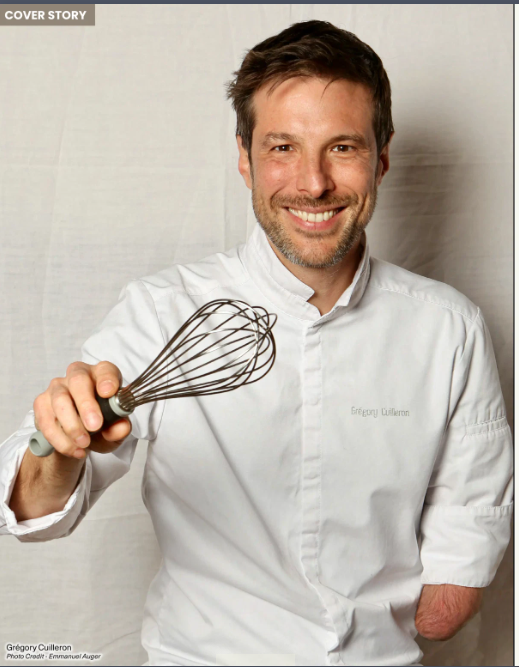
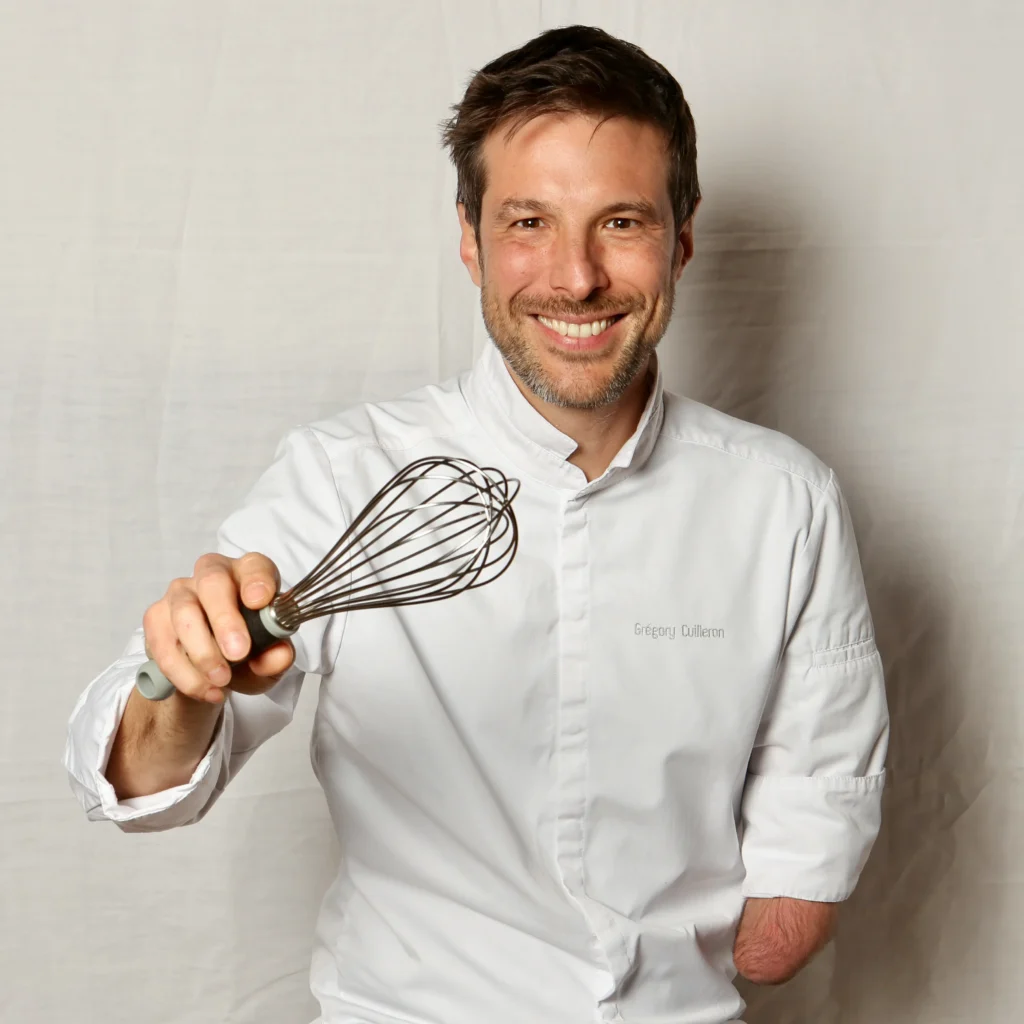
Grégory Cuilleron was born without his left forearm. It is, he will tell you, simply how he came into the world. And it is not a limitation, not a narrative of overcoming, just a fact. What defines him instead is a relentless curiosity about food, an instinct for generosity, and a conviction that kitchens, and the restaurants they feed, should work for everyone.
The Lyon-born chef came to cooking the long way around. A self-described foodie who spent his childhood asking his grandfather what was for lunch, Cuilleron first built a career in communications until a win changed everything. In 2009 he won the national competition Un dîner presque parfait: le combat des régions, under the mentorship of three-Michelin-starred chef Georges Blanc. The following year, he earned a wildcard entry into the first season of Top Chef, the only amateur among eleven professionals. It was enough to convince him to trade his desk for an apron permanently.
What followed has been anything but a single-track culinary career. Cuilleron runs restaurants, publishes cookbooks, hosts television programmes, and regularly visits schools to promote healthy, seasonal eating. He has authored several books, including Bluffez vos enfants, a collection of homemade alternatives to fast food aimed at families, and La vie à pleine main, a memoir co-written with Goncourt Prize-winning novelist Alexis Jenni, in which he reflects with characteristic energy and humour on his life and his relationship with disability.
Alongside all of this, he has become one of France’s most sought-after corporate speakers. For eight years he served as ambassador for Agefiph, France’s leading agency for the professional integration of people with disabilities, meeting with companies, associations, and public bodies to push for real cultural change in how disabled people are employed and supported. He continues that work today through talks delivered to major organisations including L’Oréal and EDF, covering topics that range from disability awareness and inclusion to team cohesion, resilience, entrepreneurship, and managing failure. The format is deliberately flexible: a morning keynote paired with an afternoon cooking session, in person or online, tailored to each organisation’s needs. Those who have heard him speak say his impact comes not only from his story but from his humour, honesty and directness, drawing sharp parallels between the pressures of a professional kitchen and the everyday challenges of working life.
Inclusion, for Cuilleron, was never a cause he arrived at from the outside. Having lived with disability his entire life, he simply designed his spaces, his teams, and his work around the assumption that they should function for as many people as possible.
In the conversation that follows, he speaks candidly about what it actually takes to work in a kitchen built for two hands when you only have one, reimagining what accessibility really means for restaurant guests, and why inclusion, to him, was never a choice. It’s just how he sees the world.

Can you tell us a bit about yourself? How did you start cooking, and when did you know this was the career you wanted to pursue?
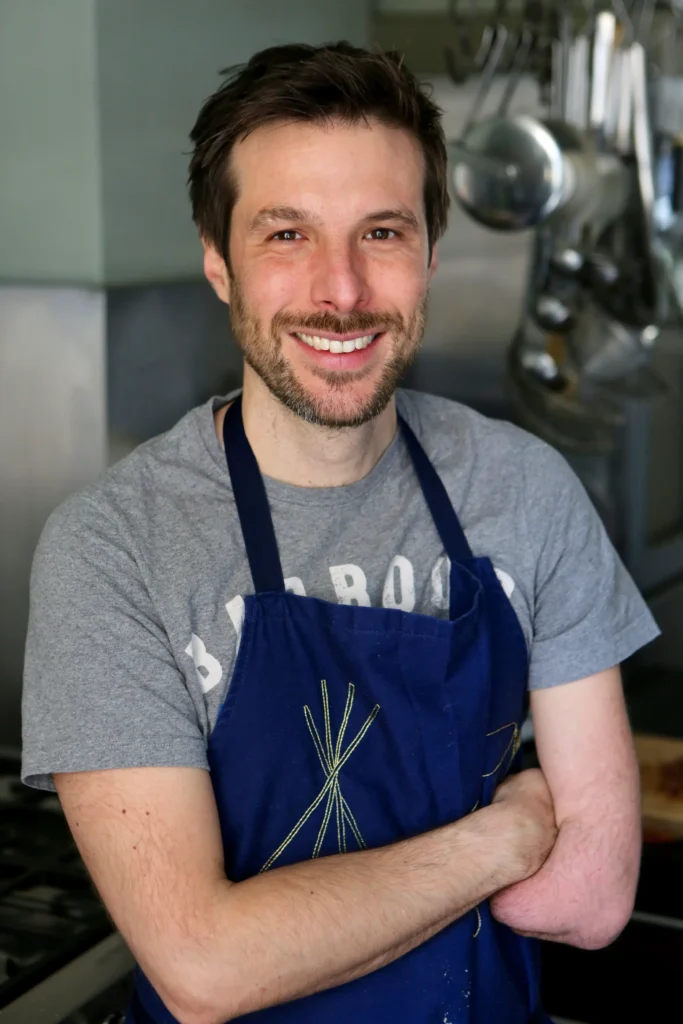
For me, at the beginning, cooking was a means, not an end. I was a foodie, I loved eating, and very early on I wanted to prepare small dishes. Even as a child, as soon as I came home from school, I would ask my grandfather what we were going to eat for lunch. I truly discovered cooking at scout camps, where we organized culinary competitions that I would prepare for months in advance. Then I followed a fairly traditional academic path, far from culinary schools, while keeping this passion intact. That’s how I ended up working in communications for a Michelin-starred restaurant in Lyon. One day, a television production company contacted us to ask if any of our clients, amateur cooks, would be interested in a new cooking competition. I replied that I didn’t know about the clients, but that I was extremely interested myself. That’s how I ended up participating in several competitions, including Top Chef. After that experience, I told myself it would be a shame not to turn my passion into a profession.
What was it like entering the culinary world as a chef with a disability?
I was fortunate to have first gone through television. It allowed me to avoid having to prove my abilities again despite my disability. Overall, the reception was good, even if people can sometimes be cautious around newcomers or those they don’t immediately understand about how they practice the profession.
Did your experience with disability change how you cook, plate, or think about food?
My disability didn’t give me a different vision of cooking. However, coming from an amateur background did. I had different references and sometimes had to adapt because I didn’t have the traditional training for the profession.
Have you had to adapt tools, techniques, or workflows in the kitchen?
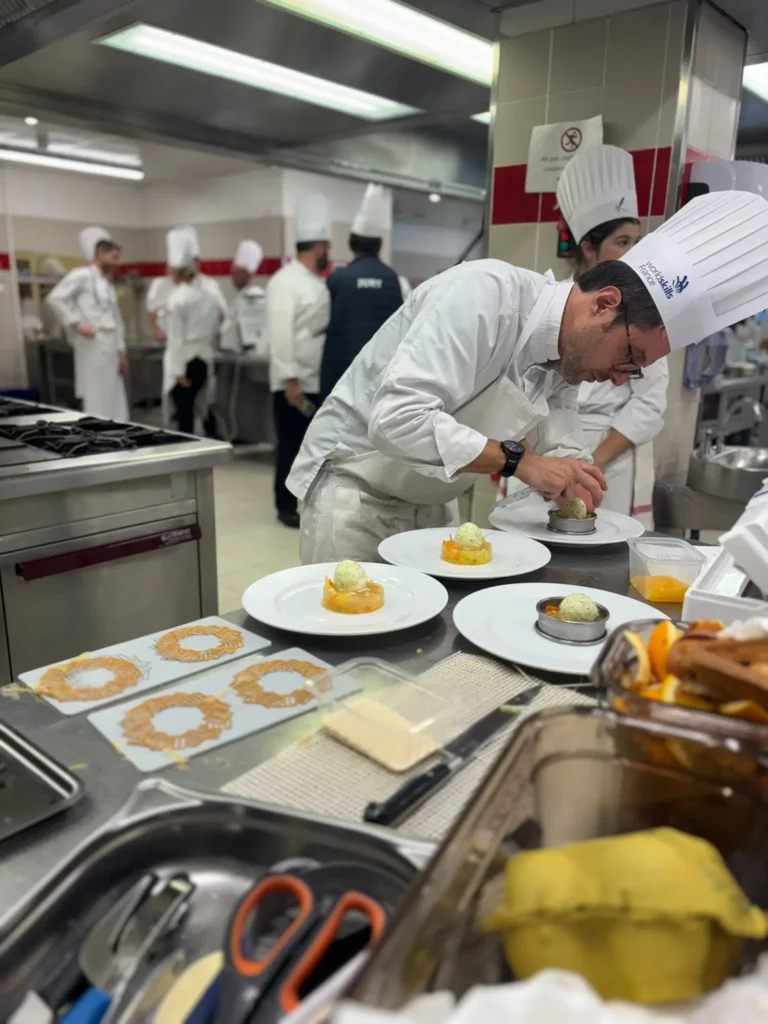
I’ve never needed to adapt the tools themselves. However, adapting techniques and organization is part of my daily life. In the kitchen, almost all techniques are designed for two hands, so I constantly have to find ways to adapt them to one hand. As for organization, yes, I try to be especially structured and efficient. This work on myself also helps me support my team in finding solutions, even when they are not living with a disability.
How did you adapt to the fast-paced and demanding kitchen environment?
Yes, the kitchen is demanding. But whether you have a disability or not, customers still need to be served well and on time. I think it mainly requires perseverance and determination. In the end, it’s not necessarily harder with a disability, you just have to find your own way of doing things.
What does an inclusive and supportive kitchen look like to you?
For me, an inclusive kitchen is one where people are judged on their skills before their appearance. It’s not easy to enter a profession like this when, at first glance, you don’t seem “properly equipped” in the eyes of others. Yet, as in any society, what should matter most are skills, motivation, and each person’s abilities, beyond differences.
How can restaurants improve accessibility across the full guest experience?
The issue with accessibility is that many able-bodied people still reduce it to a wheelchair ramp. Yet many disabilities are not related to mobility, they can be psychological, cognitive, or sensory. There is still a lot of progress to be made, especially around menus: easy-to-read versions, audio descriptions, adapted material. It also involves training staff to better welcome people with disabilities, whatever they may be, and above all ensuring they never feel like “separate” customers.
Tell us about the services your business offers.
I have several activities. Of course, there are restaurants, but I also give many corporate talks about employing people with disabilities, resilience, management, and teamwork. I also do consulting, host shows and culinary events, create filmed recipes, and give many cooking classes, especially in schools, to promote healthy, quality food. Nutrition is very important to me. We regularly organize talks with doctors on these topics. And I must say, the idea of coming to cook in Canada would really appeal to me.
How do you build inclusion into your business decisions?
For me, inclusion isn’t something you “add” it’s part of who I am. Having experienced disability myself, I’ve always tried to design spaces and experiences that work for as many people as possible. The best way to create an inclusive establishment is to design it that way from the start. It often comes down to details, but also to how teams are trained on a human level.
Do you think the culinary world is improving in terms of inclusion?
Like society in general, the culinary world is improving, but in my opinion, it’s still too slow. The restaurant industry is probably lagging behind other sectors. It’s a very physical profession, and many still believe that if you’re not tall and strong, you can’t succeed. That’s simply not true. Today, there are solutions to adapt workstations and allow everyone to find their place in this profession.
How do you blend cooking and advocacy in your daily work?
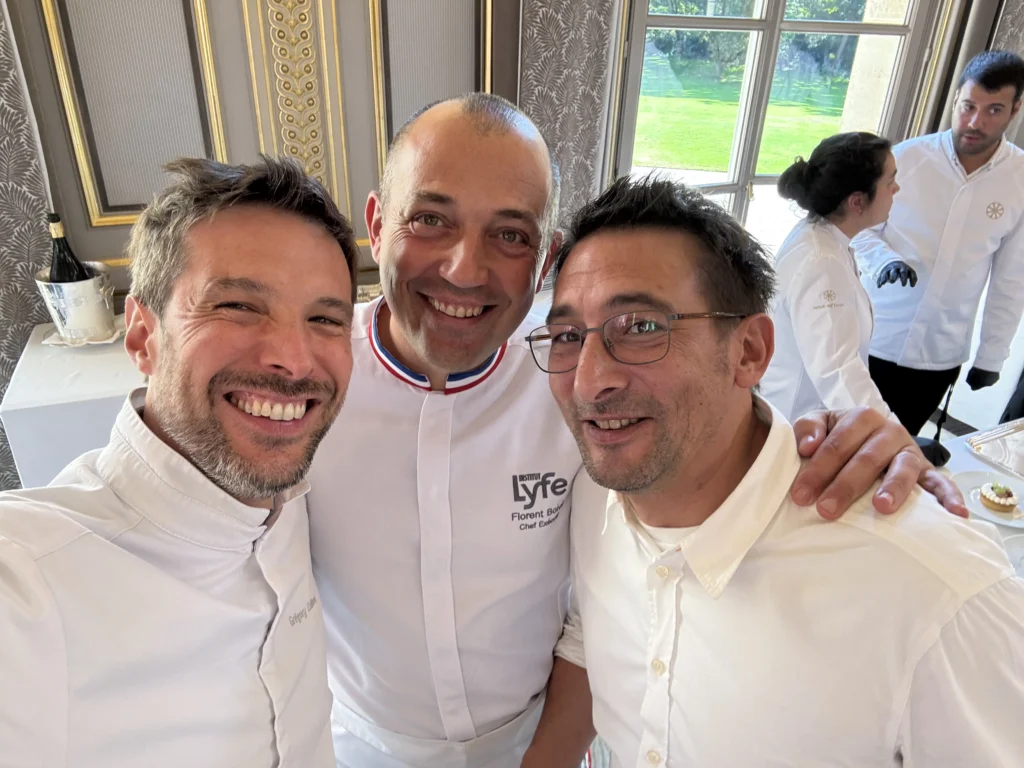
As in many things in life, I think commitment is essential, you have to try to push things forward. On a daily basis, this starts with product choices. I like working with seasonal, local products because it’s important to support nearby producers. It also helps control quality, you know how the product was grown or made. Commitment also shows in human management. This profession is already demanding enough without adding unnecessary tension. Kitchens were once often environments shaped by shouting, pressure and, at times, harsh treatment. That’s not my vision. Since the job is already tough, I believe we should instead be attentive, kind, and allow everyone to grow calmly in their journey.
If you could change one rule or norm in the culinary world, what would it be?
I think some hygiene regulations have become excessive. Of course, hygiene is fundamental, we feed people, not make them sick. But some standards have gone so far that it’s sometimes easier to use frozen or industrial products instead of fresh ones, which I think is a very bad development. I often use the example of broth. In France, if you want to prepare it, you now need a blast chiller. Yet broth cooks for hours, bacteria are destroyed. You could imagine simpler alternatives, like rapid cooling over ice, rather than requiring expensive, bulky equipment. Sometimes we need more flexibility and common sense to continue encouraging artisanal, homemade cooking.
What dish best represents you as a chef?
I love diversity in cooking, so it’s hard to choose just one dish. People often mention œuf en meurette, since I’m a world champion of this specialty, and the current champion is Canadian. It’s a poached egg with a sauce inspired by beef bourguignon: a red wine reduction with bacon, mushrooms, and shallots. It sounds simple, but at a high level, the work must be taken very far. The sauce becomes an exercise in precision, mine, for example, required four days of cooking and reduction. Beyond that, I love Asian cuisine for its subtle use of spices and balance of flavours, pho, for example, really resonates with me. I also have a strong affection for Italian cuisine, especially vitello tonnato from Turin. My great-grandmother was from Piedmont, so I have a deep emotional connection to it. Ultimately, I think this mix represents me well: I have eclectic tastes and love what I call a “mosaic cuisine,” shaped by influences, travel, and encounters.