
By Lucky Mae Fornoles

Listen to this Article
Superstition and disability in the Philippines are strongly interrelated because of the country’s traditional beliefs that often lead to stigma, neglect, and social exclusion of PWDs. These traditional Filipino beliefs are:
- Disability is a punishment from God for the parents’ or a family member’s wrongdoing.
Some Filipinos, often influenced by older religious interpretations, believe in this divine punishment resulting in shame and social isolation for the affected family, who may hide the disabled relative to avoid embarrassment.
On one of its islands, the Visayas, the superstition that subscribes to divine punishment is known as gaba. This concept of karma or divine retribution suggests that a person who commits a wrongdoing, particularly a transgression against a fellow human, will face a curse or misfortune delivered by a supernatural entity
Today, this traditional Filipino belief is challenged by modern perspectives and faith teachings. Disability organizations like the Down Syndrome Association of the Philippines (DSAPI) actively work to counter harmful misconceptions and promote acceptance while discussions on Filipino-centric Reddit forums emphasize the individual’s character, skills and strengths, rather than centering the narrative on disability. Modern Christian theology also often presents a more compassionate and inclusive view, referencing the Gospel of John where Jesus explicitly states that a man’s blindness was not due to his or his parents’ sin.
- Disability is a supernatural curse inflicted by another person as a form of vengeance.
The negative words or actions of a sumpa(curse)—often done through black magic—can bring misfortune, illness, and tragedy to a person or family.
It is believed that this can be countered using various folk practices and spiritual remedies. People can ask for forgiveness, wear anting-anting (amulet), recite oración (prayer), keep certain objects to act as a shield against curses, seek for help from an albularyo (faith healer or shaman), turn to exorcism performed by a Catholic priest, perform cleansing rituals to remove the malas (bad luck), or tear the rosary placed in the deceased’s hands.
Unfortunately, these beliefs still exist although there are modern medical explanation about disabilities. Scientific discoveries provide clear, genetic explanations for conditions that were once thought to be supernatural, and the country has laws like the Magna Carta for Persons with Disabilities, which aim to protect the rights of PWDs, but studies show that only increased contact with PWDs can help dispel myths and reduce stigma.
- Disability is related to a woman’s “lihi” during pregnancy.
This intense craving, aversion, and sensory experience can influence the baby’s physical appearance and personality.
For example, a craving for dark foods like chocolate is believed to result in a baby with dark complexion whereas a liking for light-colored foods may lead to a fair-skinned baby. Having meat cravings may also indicate a baby boy while sweet cravings a baby girl. A baby may also have a physical resemblance to someone the mother has a strong like or dislike for, or be influenced by something unpleasant the pregnant mother has seen.
This traditional Filipino belief coexists with other cultural and religious explanations for disabilities. Adherence depends on a Filipino’s education level, socioeconomic status, and whether they live in a rural or urban setting.
- Disability is attributed to bad spirits or supernatural forces.
This view is part of the moral-religious model of disability and the cultural and religious perspectives from Africa, Japan, Southeast Asia, Latin America, ancient religious texts, and karma and past life sins ingrained within Filipino culture.
It is the reason why PWDs can still be considered by some as contagious or possessed by a devil in Africa, shameful in Japan, a personal tragedy or divine punishment in Southeast Asia, and a “charity model” in Latin America. They can also be considered “defective” citizens based on ancient religious texts or a punishment because of karma and past life sins.
Younger and urban populations in the Philippines, as noted in Quora, hold different beliefs. They are likely losing the traditional mentality about disability due to exposure to modern thinking. The country’s special education (SPED) also has evolved through various legislative and programmatic developments. In the 1960s, for instance, private colleges began offering graduate courses in SPED and the government launched a 10-year training program for teachers of “exceptional children.” Then in the 1980s, the Accessibility Law mandated the installation of facilities for people with disabilities in public and private institutions. The Magna Carta for Disabled Persons (RA 7277) also affirmed the right to education for PWDs in the 1990s and from the 2000s, the policy shifted toward inclusive education where children with special needs are integrated into mainstream classrooms and the “Child Find,” a program by the Department of Education, are created to locate out-of-school children with special needs.
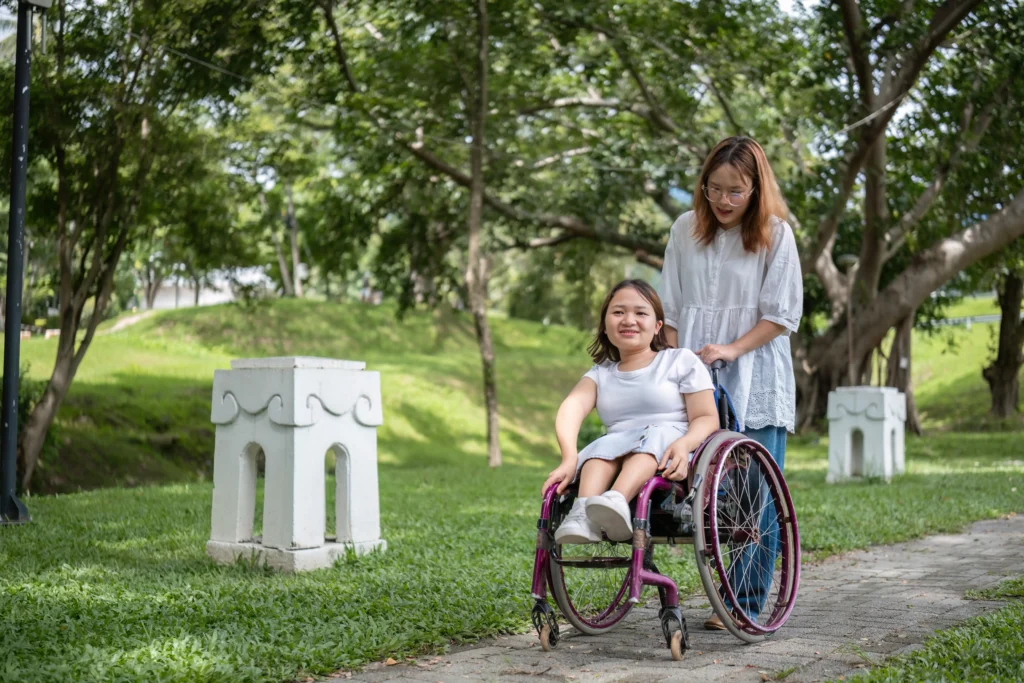
Together, these shifts point to a country in transition. While attitudes toward disability in the Philippines are still shaped by culture, family and access to resources, the combined influence of urbanisation, education reform and rights-based legislation signals a clear move away from charity-based thinking toward inclusion and dignity. Progress remains uneven, but the trajectory is evident: disability is increasingly understood not as a limitation of the individual, but as a call for systems, spaces and mindsets that allow every person to participate fully.