Listen to this Article
For nearly two decades, ReelAbilities has been building something that extends far beyond the screen. What began as a grassroots film festival has grown into a year-round nonprofit and an international platform for disabled filmmakers, advocates, and storytellers. Its evolution has been shaped, step by step, by a clear commitment to quality, authenticity, and community.
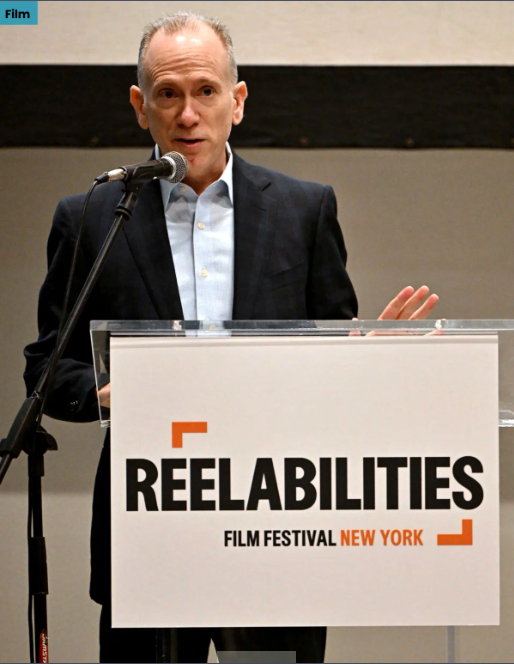
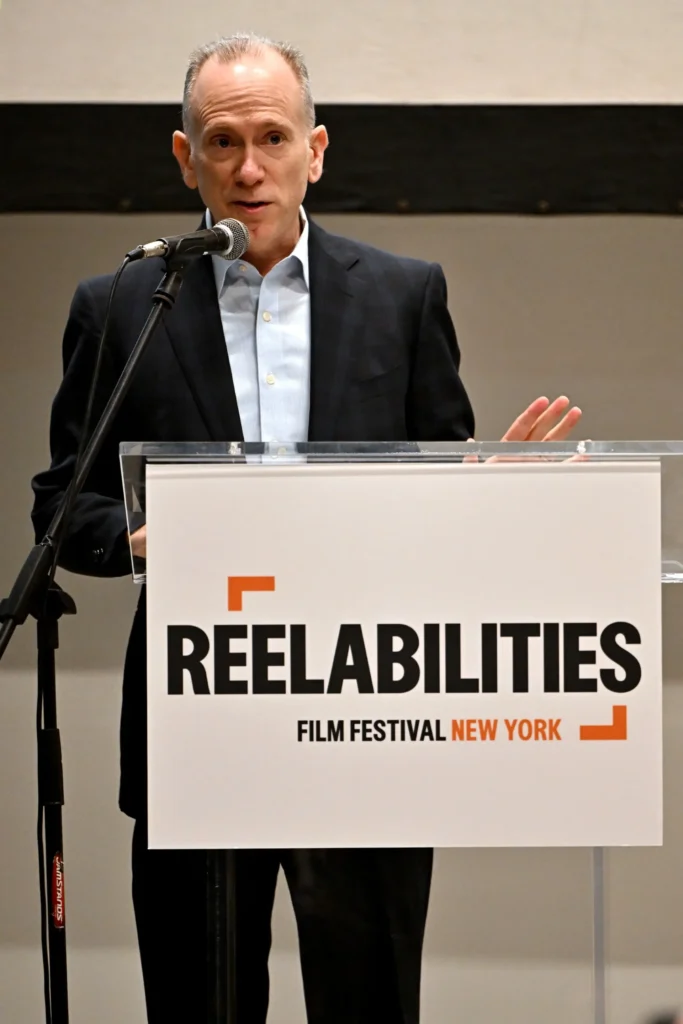
At the center of that journey is Isaac Zablocki, who still speaks about the organization with the same grounded perspective it started with. In its early days, ReelAbilities was a small operation run by a dedicated team determined to make noise and be taken seriously. That urgency defined its direction. From the beginning, the focus was on high-quality cinema paired with authentic representation of disability. These two standards helped establish credibility quickly and set it apart.
Isaac’s connection to this work is not only professional. He has spoken openly about living with a learning disability, which shaped how he engaged with the world from a young age. Traditional learning environments were often challenging, but storytelling, particularly through film, became a space where he could fully connect and understand. He describes film as both an emotional and educational tool, one that allowed him to process ideas in a way that written expression did not. That experience continues to inform his approach today, reinforcing his belief that storytelling has the power to shape perception, influence culture, and create deeper understanding.
ReelAbilities’ growth came early, but not without intention. Around its fifth year, it expanded into a national festival, marking a turning point where its model proved replicable in different communities. More recently, the organization transitioned into its own independent nonprofit after years under the leadership of the JCC Manhattan. That shift has allowed ReelAbilities to invest in their future and approach growth more strategically.
As the platform has expanded internationally, maintaining the sense of community that they’ve fostered has become increasingly important. ReelAbilities continues to operate with a hands-on approach, staying closely connected to individuals within the disability community. Over time, the organization has also recognized that it has become more than a showcase for films. It is now a meeting place, where the disability community gathers and reconnects.
That sense of connection shapes how success is defined. While large audiences and high-profile recognition are visible markers of growth, Zablocki consistently returns to smaller, more personal moments. Success is when someone in the audience sees themselves on screen for the first time, he shares. It is when a film gives someone new language to describe their own experience. These moments, though quieter, are what continue to guide the work.
ReelAbilities’ role has also expanded beyond exhibition. For years, Zablocki resisted moving into film production, maintaining that the organization’s responsibility was to elevate existing work. That perspective shifted as it became clear that authentic storytelling requires support earlier in the process. Today, ReelAbilities is involved at multiple stages of filmmaking, from sponsoring projects to running pitch programs and working with films in development. This involvement reflects a practical reality: the stories the organization wants to showcase need support to reach completion.
That shift has reinforced a broader point about representation. It is not limited to what appears on screen. Behind the camera, significant gaps remain. Zablocki points to ongoing challenges within production environments, where many professionals with disabilities still feel unable to disclose their disabilities due to fear of losing work. This, he notes, continues to limit opportunity and excludes talent that already exists within the industry.
From the beginning, ReelAbilities has taken a firm position on how disability stories should be told. The organization has consistently rejected narratives rooted in pity or extreme portrayals, instead prioritizing stories that reflect real, lived experiences. This approach, shaped early on with guidance from collaborators such as Lawrence Carter-Long, who now serves as ReelAbilities’ Director of Engagement, has influenced not only its own programming but also how the broader industry approaches disability storytelling. There is now a growing appetite for authentic, first-person narratives, which is a shift Zablocki sees as both necessary and long overdue.
Even so, he is clear that progress is uneven. Representation on screen has improved, but disability remains underrepresented, and when it does appear, it is often still framed as the central issue rather than part of everyday life. Zablocki points to a simple but significant gap: the absence of disabled characters in roles that are not defined by disability. The opportunity, he suggests, lies in normalizing disability across all types of stories.
His own experience with a learning disability continues to shape how he sees this work. As a student, he connected with storytelling through film in a way that traditional learning did not offer. That connection influenced both his creative path and his belief in storytelling as a powerful educational tool. Films, he explains, shape how people understand the world. When disability is missing or misrepresented on screen, it affects how it is understood in real life.
That awareness informs how ReelAbilities approaches its responsibility as a cultural platform. Programming decisions are made with care, recognizing the impact each film can have. Even strong films may be excluded if they reinforce harmful narratives or misrepresent disability. For the organization, representation is not just about inclusion, it is about accuracy and responsibility.
Audience response has evolved alongside the organization. Over 18 years, ReelAbilities has built a returning audience that understands its approach and engages deeply with its programming. At the same time, barriers remain. The term “disability film festival” can still deter some audiences, reflecting broader societal discomfort and stigma. Zablocki’s response is practical. He invites people to experience the films directly, confident that the work itself can shift perceptions.
Moments within screenings continue to reinforce the importance of that engagement. One example stands out: a screening of Deaf President Now! , co-directed by Nyle DiMarco, where the audience was largely Deaf and the experience was shaped by that community. The reaction was physical and collective, with audience members responding in ways that transformed the atmosphere of the theatre. For Zablocki, it was a reminder of how different a space can feel when it is truly designed for and led by the community it represents.
Looking ahead, the focus is on expansion with intention. ReelAbilities is growing its educational programming, bringing films into workplaces to encourage cultural change. Its industry work is also deepening, with more resources dedicated to influencing filmmaking itself, not just exhibition. Globally, Zablocki sees emerging opportunities, particularly in Europe, where new policies and increased attention to accessibility are creating space for further progress.
Despite the growth, the motivation remains straightforward. There is more work to do, more people to reach, and more support needed to sustain that momentum. Each day is focused on building the organization’s capacity and extending its impact. The goal is not simply to grow, but to continue shaping how stories are told and who gets to tell them.
ReelAbilities may have expanded far beyond its origins, but its direction remains consistent. It is still rooted in the same idea that started it all: that storytelling, when done with authenticity and care, has the power to change how people see each other. And that work is far from finished.