
Listen to this Article
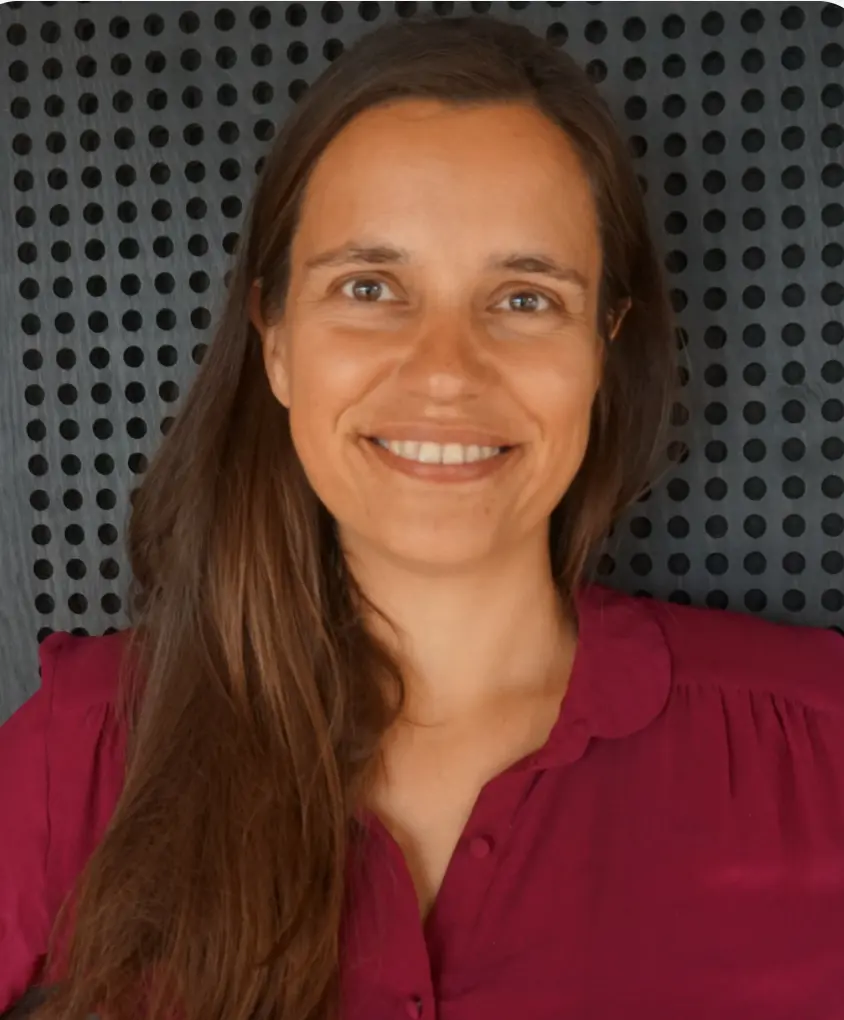
Lise Pape’s interest in mobility support arose from having a father with Parkinson’s disease. Watching her father live with the condition showed how medical treatment could feel limited in daily life. Medication sometimes helped, but benefits faded over time and side effects could include hallucinations that required further treatment. That experience left Pape frustrated and looking for a practical way to support her father’s daily function rather than focusing only on clinical approaches.
Mobility became her focus because it shaped many parts of her father’s independence. Walking difficulties affected his safety, confidence and participation in everyday activities, particularly when freezing of gait occurred. During these episodes, movement could stop suddenly, increasing fall risk and making even short distances difficult to navigate without interruption. What stood out was how quickly movement returned once a clear visual cue appeared in front of him.
When her father froze, he would often ask someone nearby to place a foot in front of his own. He could then step over it and continue walking almost immediately. The contrast was striking. Without the cue, he could not move. With it, movement resumed. Questions followed, including whether imagining a visual cue might work, but it did not. The reference needed to exist in real space. Those moments pointed to the need for a prompt that could move with the person rather than relying on someone nearby.
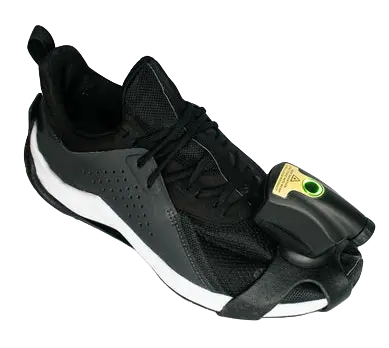
That observation later shaped Lise Pape’s creation of the Path Finder, a device that attaches to footwear and projects a visible line onto the ground ahead of the wearer. The work led to the formation of Walk the Path, the company Pape established while completing a master’s program in innovation design engineering in London, with a focus on practical mobility support. Rather than adding a physical object to step over, the device creates a reference point that travels with the user and can function across environments, from indoor corridors to public spaces.
Supported by Imperial College London and the Royal College of Art, Pape received guidance within this academic setting to pursue hands-on innovation while engaging directly with users. Her process extended beyond her father and included people living with Parkinson’s disease and multiple sclerosis, allowing her to examine shared challenges while remaining attentive to individual variation.
From the early stages, Pape prioritized safety and usability. She wanted a projected cue rather than a physical one, since objects added to the walking path could introduce new risks. She tested several projection methods, including ultra-bright LEDs, but found they blurred at distance and lacked the sharpness needed for reliable visual guidance. Laser projection delivered a clear line without adding physical obstacles.
Colour testing followed. Blue proved uncomfortable to look at, particularly in dim environments. Red offered familiarity but performed less well in visibility trials, especially on dark grey flooring. Green stood out more clearly across surfaces and lighting conditions. Feedback from users added another layer of reasoning. Green aligned with widely understood signals associated with movement, while red carried warning associations that some users found stressful. Based on these findings, green became the final choice.
Some people worry that using the green line in public will make them stand out or attract attention. Walk the Path responds by sharing real user experiences that show how curiosity can turn into conversation. Children often ask simple questions, and several users say those moments feel easier than expected and can even make public situations feel less awkward rather than more stressful.
User feedback showed effects that went beyond walking itself. Some people reported being better able to reach shared spaces within care homes, which supported social interaction and daily routines. These changes were modest but meaningful, particularly in settings where isolation had become common.
At the same time, Pape emphasizes the importance of setting realistic expectations. She has encountered families who believed the device would restore walking for wheelchair users, which it cannot do. Clear communication remains essential, so users and caregivers understand both potential benefits and limits.
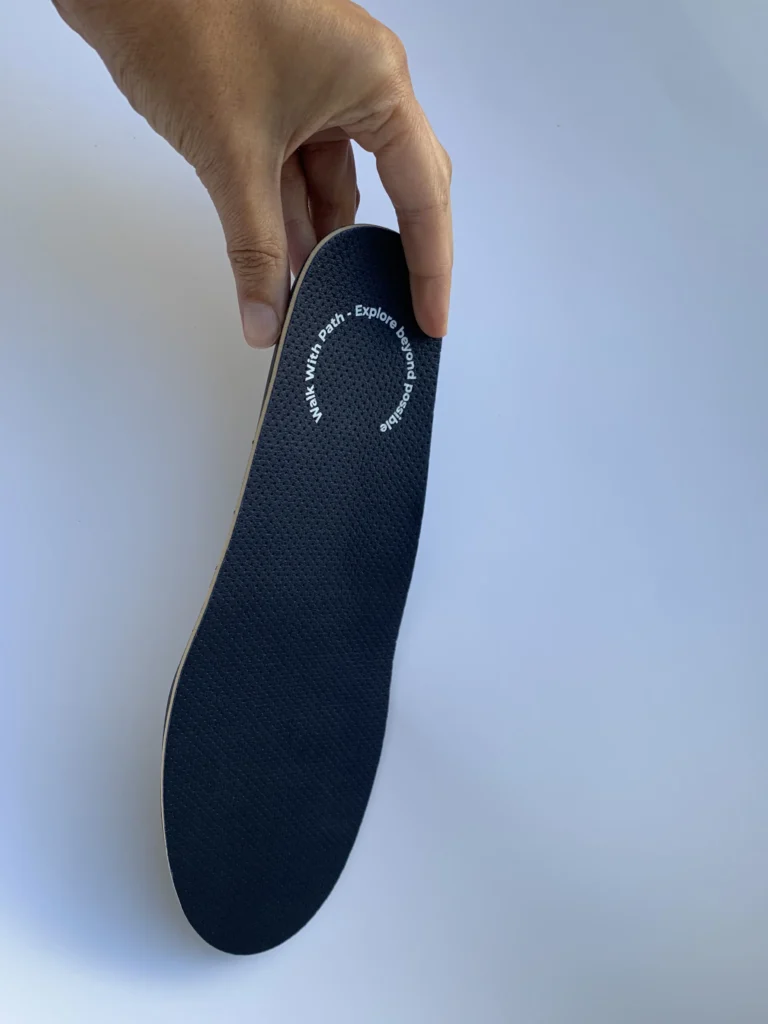
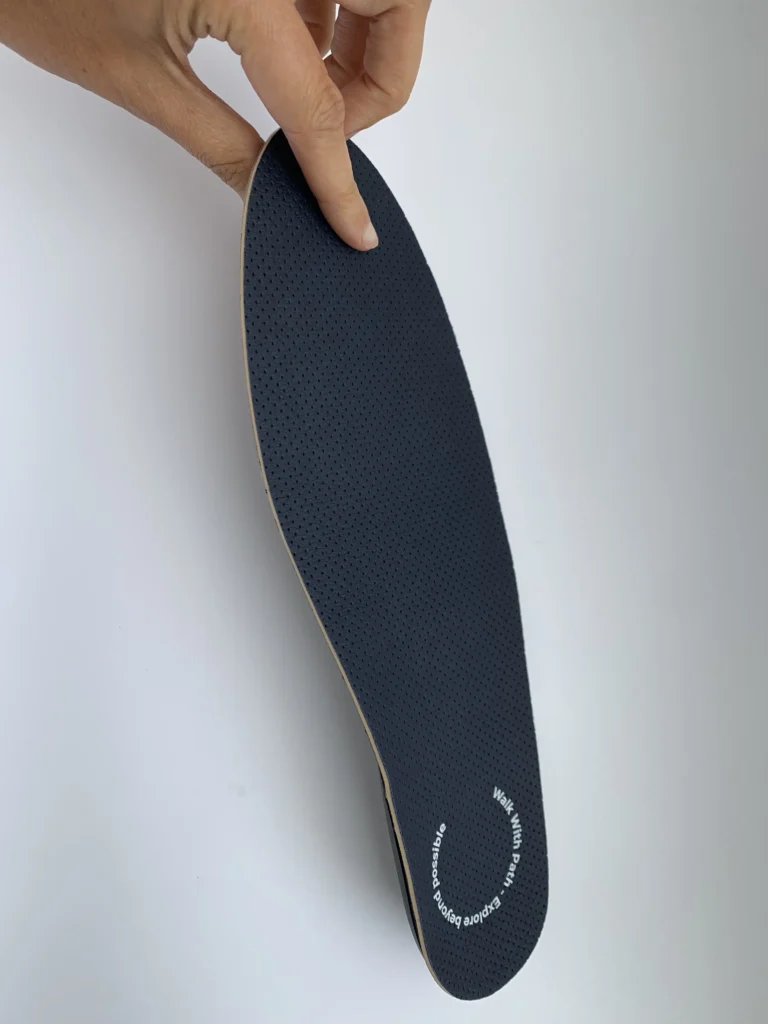
Those limits shape how Pape thinks about inclusive design. Rather than promising universal solutions, her approach focuses on understanding who can use a tool, who cannot and why. Walk the Path is developing an insole product that tracks gait and movement, which extends support to people whose needs are not addressed by the Path Finder alone. The insole connects to an app via a smartphone, which works well for some users but presents access challenges for others. Some potential users, particularly older populations, lack access to smartphones, but the team is now exploring alternative data transfer methods that do not rely on personal devices.
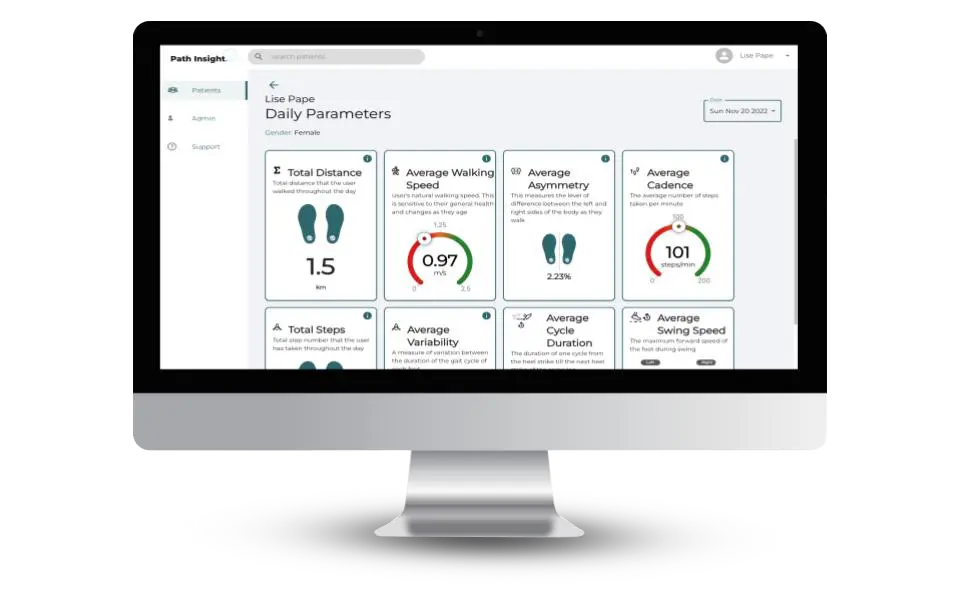
The company works closely with users on an ongoing basis through workshops, focus groups and regular input from physiotherapists, occupational therapists, caregivers and people who use the devices. Design decisions also take into account differences in footwear habits across cultures. Feedback is collected continuously and used to guide improvements over time rather than treated as a one-time step.
Upcoming research with the NHS and patient partners intends to examine the usability of the insole for people with diabetes, including individuals from lower-income communities who are often underrepresented in research. The team continues to work directly with clinicians through demonstrations and suitability assessments carried out alongside NHS physiotherapists.
Looking ahead, Pape sees gait as a vital sign that can offer insight into fall risk and emerging health conditions, including neurological and cognitive changes that express themselves through movement. Building a robust library of gait patterns remains a central goal, with clinical oversight positioned as a necessary next step rather than an afterthought.
Designing physical medical products, she notes, takes time. Certification, testing and manufacturing require patience and careful decision-making. For travellers navigating public spaces, airports and hotels, the result may appear simple: A green line appears, a step follows and movement continues. But behind that moment sits years of observation, iteration and restraint, shaped by a desire to support mobility without adding new risks. The Path Finder brings that thoughtful, practical approach to mobility support.