By Angela Lynn
Listen to this Article
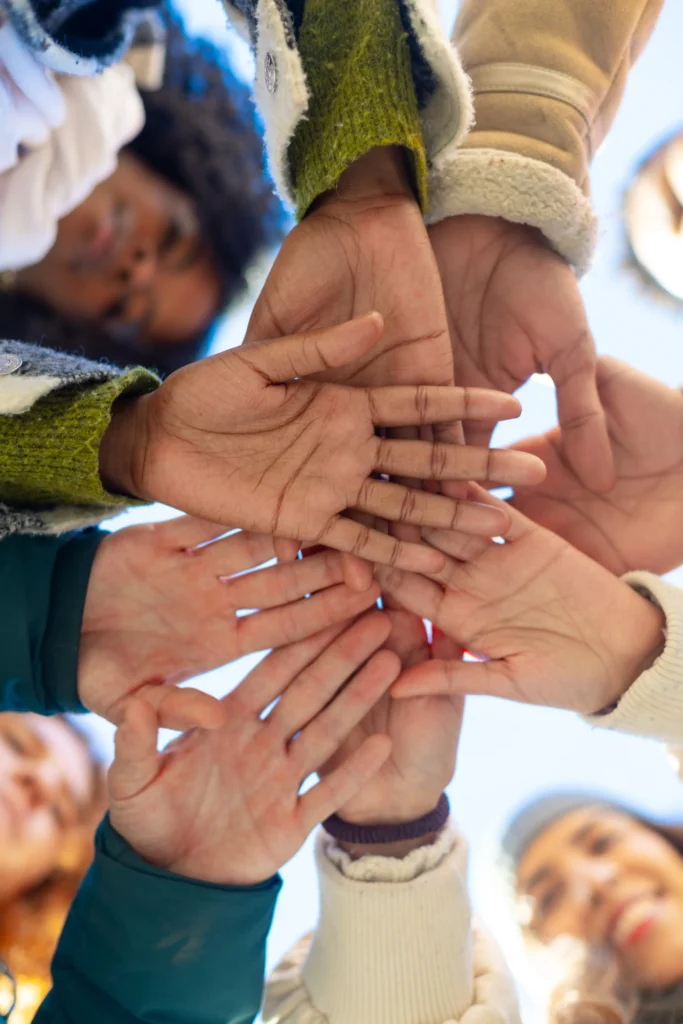
Belonging is often spoken of as a modern goal, yet it is not new. Long before policies and public conversations, there were communities where Deaf and hearing people lived and communicated without barriers. These environments were not defined by labels or separation, but by shared understanding. In many ways, they reflect what could be considered Deaf and hearing utopian conditions, not because they were perfect, but because communication allowed people to exist together without exclusion.
These examples, often quietly written in history, show that belonging begins with access, respect, and the willingness to see and value one another. When communication is shared, people are not divided into categories. They are able to participate, contribute, and connect as part of one community.
Global Shared Signing Communities
- Martha’s Vineyard — Massachusetts, United States, North America
1700s to early 1900s
Both Deaf and hearing people used sign language in daily life due to a high rate of hereditary deafness. Communication was shared, allowing Deaf people to be fully part of social and community life. Belonging developed naturally through common language.
- Ottoman Empire — Istanbul, present day Turkey, Middle East and Southeastern Europe
1400s to early 1900s, with regions such as present-day Lebanon under Ottoman rule from 1516 to 1918
Within the Ottoman royal court at Topkapi Palace in Istanbul, a form of sign language was shared among both Deaf and hearing people. Deaf people were integrated and respected by the palace community, and some hearing people of the court also used sign language in their daily communication. In some situations, sign language helped keep conversations more private, reducing the risk of being overheard by outsiders who were not part of the palace environment. Both Deaf and hearing people were trusted in certain roles, where their presence and ways of communicating supported daily interactions within the court. This shared way of communicating created a sense of connection and reflected a natural form of belonging within the palace community.
- Bengkala — Bali, Indonesia, Southeast Asia
At least 1800s through documented generations
A local sign language, Kata Kolok, was used by both Deaf and hearing people. Deafness was part of the community’s cultural and spiritual identity, where Deaf people were respected and included. Shared language created connection and reinforced belonging.
- Adamorobe — Ghana, West Africa
1800s through 1900s, historically documented
A local sign language was used across the community by both Deaf and hearing people. Communication allowed participation in daily life without constant adjustment. Belonging was supported through shared interaction and mutual understanding.
- Providencia Island — Colombia, Caribbean, South America
1900s, documented research period
Deaf and hearing people adapted shared signing practices to communicate across the community. This accessibility supported participation and strengthened belonging.
- Grand Cayman Island — Cayman Islands, Caribbean, British Overseas Territory
1800s to early 1900s, limited historical records
Localized signing systems supported communication in daily life. Deaf and hearing people were able to interact within the community, reinforcing belonging through shared communication.
- Amami Island — Japan, East Asia
1900s, documented observations
Localized sign communication systems allowed people to interact beyond spoken language. This shared communication supported connection and belonging.
- Yucatán Peninsula — Mexico, North America
Pre-1900s origins with 1900s documentation
Indigenous sign systems among Yucatec Maya communities were used by both Deaf and hearing people. Communication across the community supports belonging through shared language.
Across these communities, belonging was not created through special systems, but through shared communication. When language is accessible to people, connection becomes natural and barriers are reduced.
The True Belonging
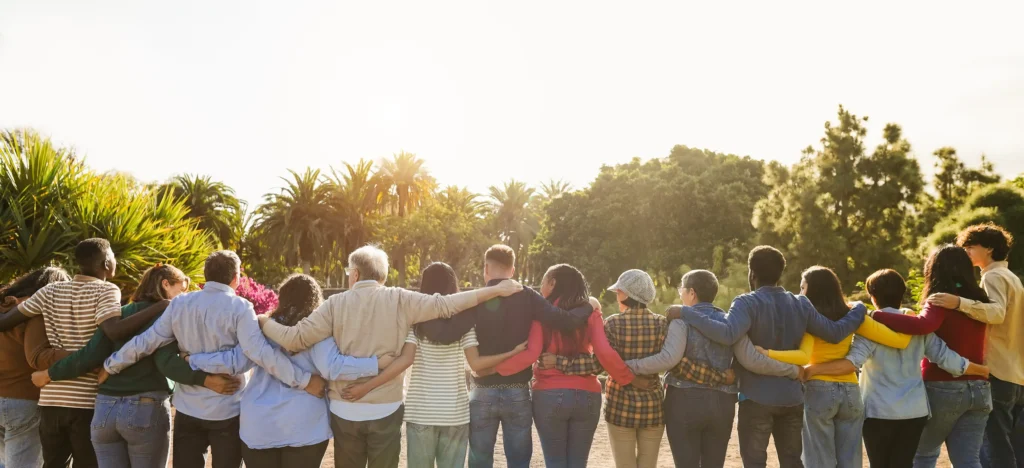
These communities remind us that belonging is not new. It has existed across different parts of the world wherever communication was shared and understood. They show that belonging is not created through labeling or separation, but through connection.
Belonging is about being seen, valued, and respected without needing to prove one’s place. It is not about dividing people into groups, but about bringing people together to work through differences. Picture a sunflower in a flower garden. It stands tall, distinct, and bright, yet it does not grow alone or apart from the others. It grows among different flowers, each with its own form and color, contributing to a shared space where all are visible and valued. The sunflower does not lose its identity by being among others. It becomes part of something greater. In the same way, people are not meant to be separated by labels, but to exist together where each presence adds value.
We live in a world shaped by languages, cultures, and differences. At times, these differences may feel unfamiliar or misunderstood. However, when approached with openness and a willingness to learn, belonging becomes possible. Misunderstanding may occur, but when addressed with intention and respect, it can lead to deeper connection.
Looking ahead, advancements in technology and artificial intelligence are creating new opportunities to bridge communication gaps. These developments have the potential to support both Deaf and hearing people in building more accessible and connected environments. Belonging will continue to evolve, but its foundation remains the same: communication, respect, and shared understanding.
Through my work with Project Belonging, I am committed to helping Deaf and hearing communities understand these differences, reduce stigma, and build meaningful connection through communication and shared experience. I offer speaking engagements and keynote presentations on Project Belonging supporting organizations, communities, and global audiences in creating spaces where people are truly seen, valued, and included.
For speaking engagements or to connect, please reach me at
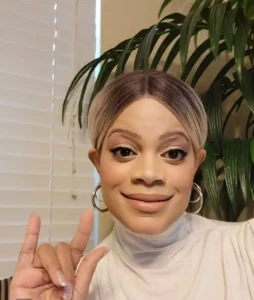
 Sunflowerly yours, Angela Lynn
You might be interested in: