Listen to this Article
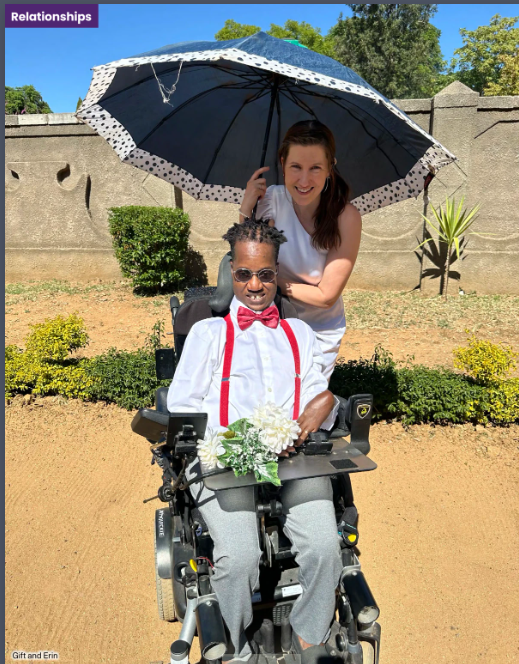
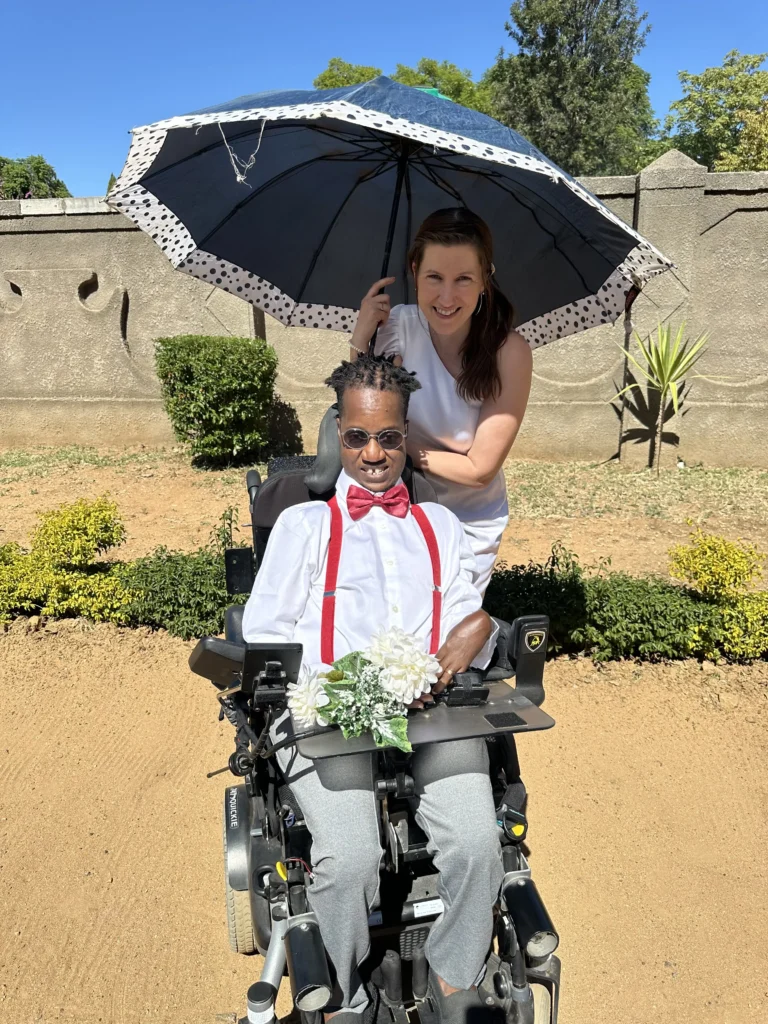
There is a quiet clarity in the way Gift and Erin Tshuma speak about their lives, work, and relationship. It’s not rehearsed or polished but grounded in real-life experience and shaped by the realities they navigate. Together, they carry that perspective into their advocacy, consulting, and daily lives, where inclusion is something they put into practice rather than leave as an idea.
At the center of their work is Tshuma Consulting, co-founded by Gift and Erin Tshuma with a clear intention: to move beyond surface-level conversations around diversity and accessibility. Their approach is rooted in something many organizations still lack, lived and living experience. As Gift explains, too many firms operate in this space without a real understanding of what disability means in daily life. While Gift brings his living experience navigating disability across multiple systems, Erin’s background in attendant care, operations, and community-based support grounds their work in practical, day-to-day realities. Together, they combine personal insight with hands-on experience working alongside people with disabilities. Erin’s perspective, shaped by years in direct support roles, highlights how barriers extend beyond the physical, often rooted in attitudes and assumptions within everyday environments, an understanding that continues to inform their work by focusing on what needs to shift both at a systems level and in daily interactions.
Their consulting company works across sectors, from government to nonprofits to post-secondary institutions. They conduct accessibility audits, examine systemic and attitudinal barriers, and develop strategies that go beyond compliance. Their goal is not simply to make spaces “inclusive,” but to create environments where people feel they belong. That distinction matters deeply to them. Inclusion can sometimes feel performative or obligatory. Belonging, as Gift describes it, sends a different message entirely: you are welcome here, and you are meant to take up space.
This philosophy shapes how they engage with clients. Rather than arriving with predetermined solutions, they ask questions first. What are you trying to achieve? Where are you struggling? That shift in approach, they have learned, leads to more meaningful outcomes. It is less about imposing expertise and more about building it collaboratively.
Their work in post-secondary institutions highlights this approach in action. In one case, they supported a university in understanding the barriers faced by racialized students with disabilities. The work went beyond identifying physical barriers and into deeper conversations around stigma, identity, and access to support. It revealed something often overlooked: the gap between how many people have disabilities and how many feel safe disclosing them.
For Gift and Erin, success is not defined by a single milestone. It is reflected in moments when organizations begin asking honest, sometimes uncomfortable questions. When people admit they do not have all the answers, that is where real change begins.
That same mindset carries into Gift’s work in the arts. A singer as well as an advocate, he brings that perspective into Blurring the Boundaries, an organization connected to his creative and advocacy work, where accessibility is explored through artistic expression. Gift works across both the nonprofit and arts sectors, using these spaces to advance inclusion while challenging how people access and participate in creative fields. Within this work, adaptive musical instruments form part of that approach, including a digital instrument created during COVID that used a webcam to generate music through motion. By moving their head in different directions, a user could produce different notes, while distance from the camera affected tone and intensity, turning simple movement into sound. It reflects a broader focus on rethinking how music can be created so it aligns with different abilities, opening up new avenues for expression at a time when many people were experiencing isolation.
Outside of their professional work, Gift and Erin’s partnership offers another lens into how they navigate the world. As an interabled and interracial couple, they are often subject to assumptions that others do not have to confront. The most persistent misconception is also the simplest: that their relationship is somehow different or unusual.
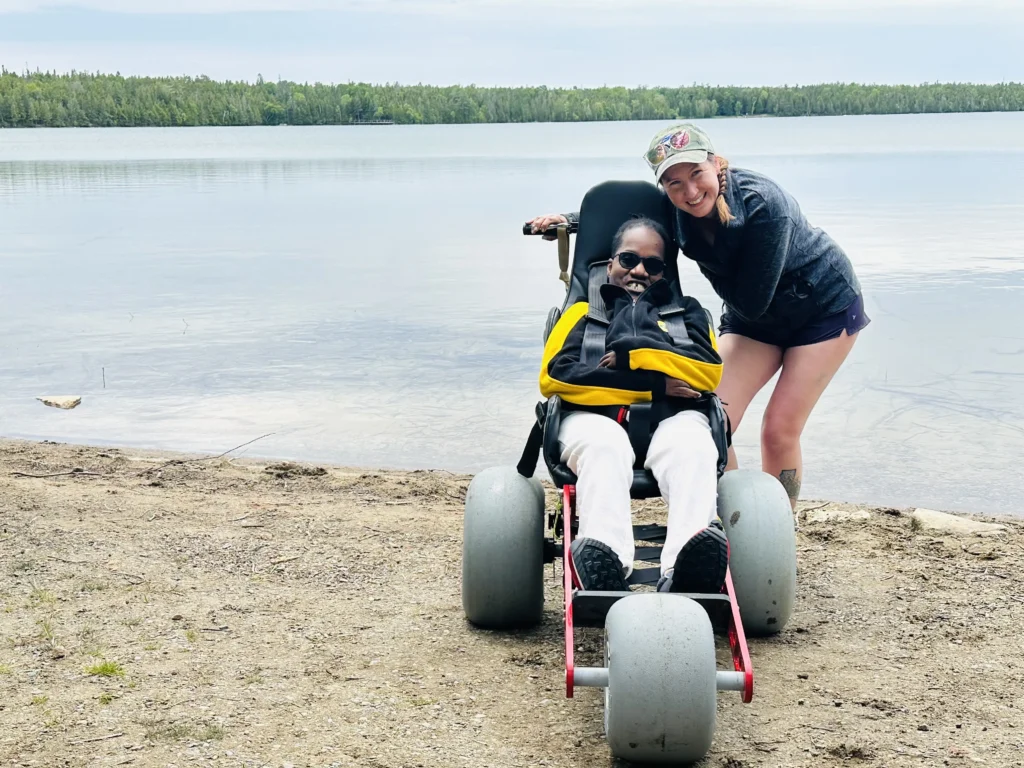
In reality, their life together looks like any other couple’s. They travel, they argue, they enjoy food, host friends, and spend time together in ways that feel meaningful to them. The difference lies in how the world responds to them. Something as ordinary as holding hands can draw attention, often through stares rather than words.
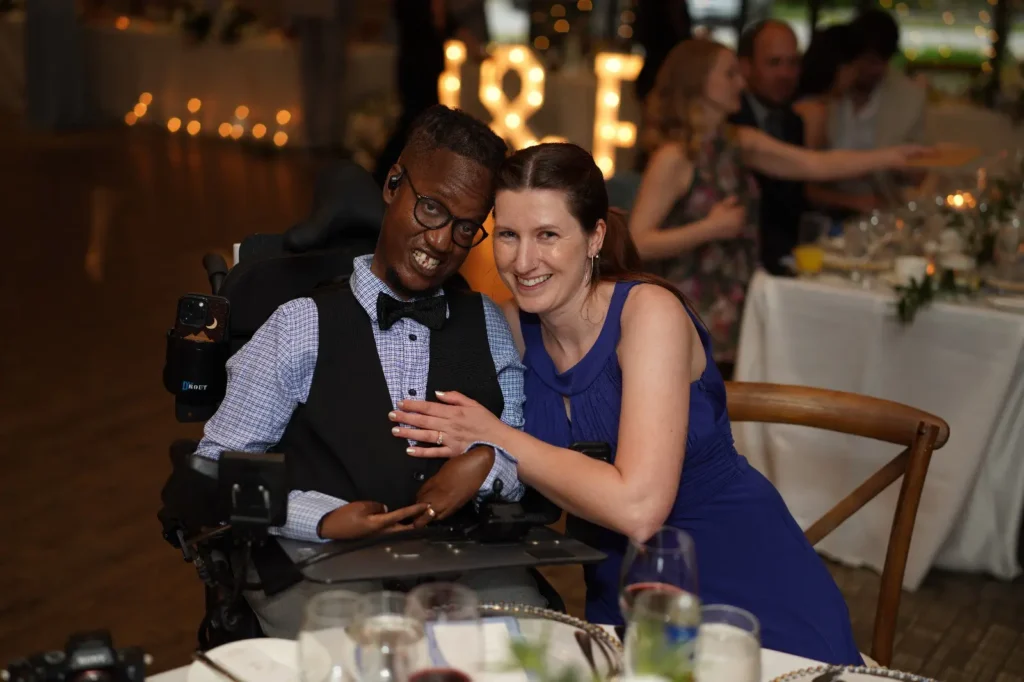
Those moments can be exhausting. Some days, they choose to educate. Other days, they let it pass. What matters is that they continue to live their lives on their own terms. They do not withdraw or adapt themselves to make others more comfortable. There is also a dynamic within their relationship that allows them to navigate these experiences together. When one person feels the weight of those stares and assumptions more heavily, the other steps in to balance it. It is a form of partnership built on awareness and mutual support.
Their relationship is also defined by both connection and independence. While they share core values, like a love of travel and time together, their individual interests are very different. Early on, that difference felt like a potential barrier. Over time, it became a strength. They do not need to mirror each other’s hobbies to build a strong marriage. Instead, they respect those differences while maintaining a shared foundation.
Across everything they do, from consulting to creative work, this message continues to surface: ability is not fixed and identity cannot be reduced to a single narrative. Advocacy, consulting, artistry, and everyday life can all coexist.
Gift and Erin Tshuma’s work is ongoing with a clear direction: Look at your abilities, not your barriers, and use that as your strength.