

Listen to this Article
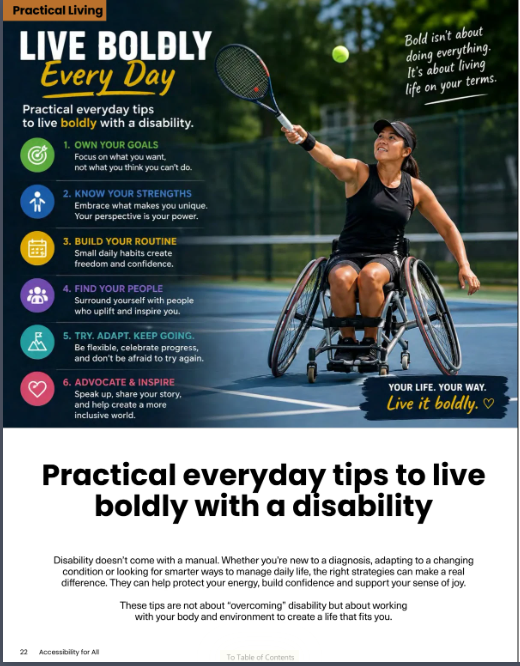
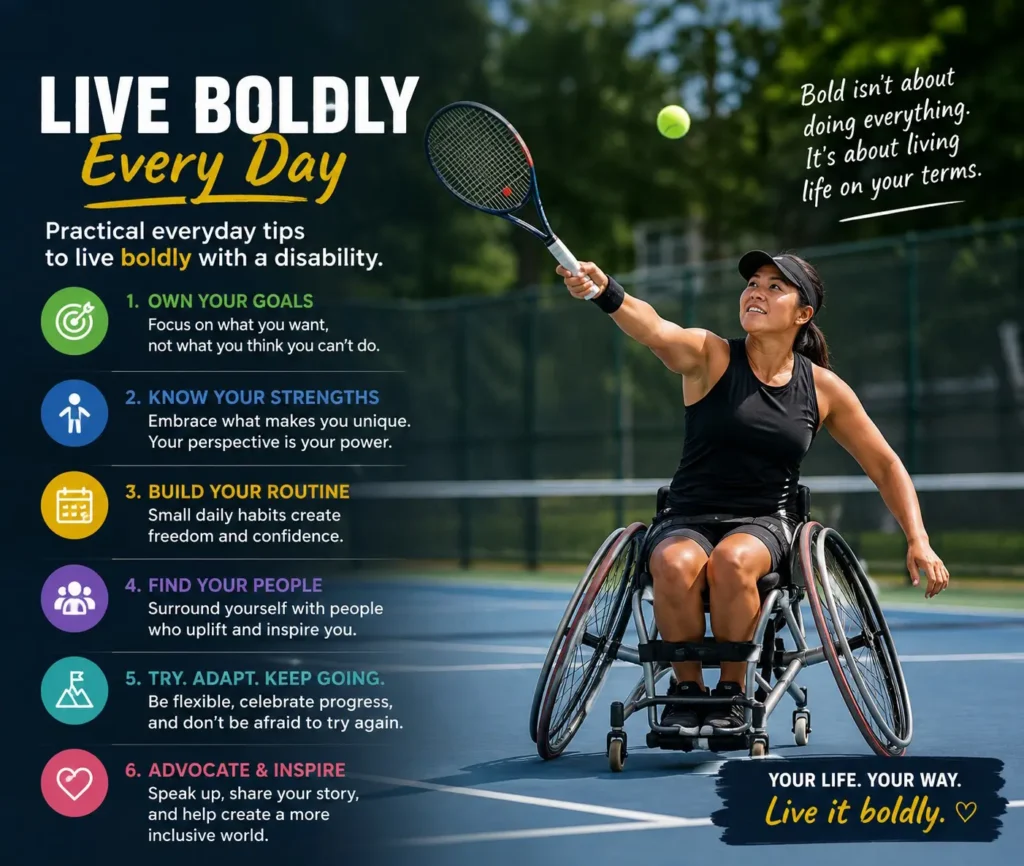
Disability doesn’t come with a manual. Whether you’re new to a diagnosis, adapting to a changing condition or looking for smarter ways to manage daily life, the right strategies can make a real difference. They can help protect your energy, build confidence and support your sense of joy.
These tips are not about “overcoming” disability but about working with your body and environment to create a life that fits you.
At home
Your living space should work for you, not against you. Small modifications can dramatically reduce fatigue and frustration without requiring major renovation.
Rethink your layout
Keep the items you use most within easy reach. No bending, stretching, or hunting. A lazy susan in kitchen cabinets, a bedside caddy, or a rolling cart that travels with you around the home can eliminate dozens of unnecessary movements each day.
Lighting matters more than you think
Poor lighting is a major fall and accident risk, and it drives up cognitive fatigue for people with visual or neurological differences. Add plug-in LED night lights along hallways, under-cabinet lighting in the kitchen, and motion-activated lights in frequently used areas.
Bathroom safety is non-negotiable, and it can look great
Grab bars are no longer the clinical chrome rods of decades past. Modern options come in matte black, brushed gold, and sleek minimal designs that double as towel bars. A handheld showerhead and a shower bench are two of the most transformative upgrades you can make for under $100.
Floors first
Rugs are a fall hazard and a wheelchair/mobility aid obstacle. If you love rugs, opt for low-pile styles with non-slip backing, taped or weighted edges, and ensure they’re never in high-traffic transition zones.
Let technology do the heavy lifting
We’re living in a golden age of assistive technology, much of it built right into the devices you already own. Make use of them.
Your smartphone is an assistive device
Use voice commands to set reminders for medications, appointments, and rest breaks. Screen readers, magnification, and display contrast settings are built into both iOS and Android. Explore your phone’s accessibility settings. Most people only scratch the surface of what’s available.
Smart home tech is a game-changer
Voice-activated lights, locks, thermostats, and appliances reduce physical demands significantly. Devices like Amazon Echo or Google Nest can be set up affordably and don’t require technical expertise to operate.
Resources worth knowing:
- Be My Eyes: connects you with a sighted volunteer via video for visual tasks
- ai: real-time transcription for meetings and conversations
- Medisafe: medication management and reminders
- Google Maps: accessible route planning, including wheelchair-accessible transit options
- Goblin Tools: breaks overwhelming tasks into smaller, manageable steps (popular in the neurodivergent community)
Energy management
For many people with disabilities, particularly those with chronic illness, fatigue-related conditions, or pain, energy is the most precious resource of all.
The spoon theory is your friend
If you haven’t heard of it, the concept describes finite daily energy units (“spoons”) that must be budgeted across activities. Tracking your energy patterns for a week can reveal when you’re most capable and where your biggest drains are.
Plan your week in tiers
Designate high-demand days for appointments and errands and protect low-demand days for rest and lighter tasks. Avoid scheduling two high-effort activities back-to-back.
Batch and prep
Cooking two or three meals at once can help reduce daily effort. Laying out clothes the night before and preparing your bag or essentials in advance can also cut down on decision-making and physical strain throughout the day. Decision fatigue is real so minimizing it conserves energy for what matters most.
Build in rest before you need it
Reactive rest (collapsing after overdoing it) is less effective than proactive rest (scheduled breaks before fatigue peaks). Even 10-minute rest windows between activities can extend your functional hours significantly.
Getting Around
Navigating the world as a person with a disability requires planning, but it also opens up a community of people who’ve already mapped the terrain.
Know your rights
Many countries have laws and human rights protections that require accessibility accommodations in public spaces, transportation, workplaces and services. Understanding what you are entitled to can make it easier to advocate for the support and access you need.
Call ahead, always
Whether it’s a restaurant, a medical clinic, or a friend’s home, confirming accessibility in advance saves you from unpleasant surprises. Most businesses are more accommodating when given lead time.
Resources providing information for getting around:
- Wheel the World— accessible travel guides and booking
- AccessNow— crowd-sourced accessibility ratings for venues
Travel in your comfort zone first.
If you’re newly using a mobility aid or managing new limitations, start with routes and venues you know before expanding. Confidence builds gradually so give yourself that grace.
Mental and emotional wellness
Practical living isn’t only physical. The psychological dimensions of disability: managing others’ perceptions, grief over lost function, navigating systems, are just as real.
Find your people
Peer support is consistently one of the most effective resources available to people with disabilities. Online communities such as Reddit’s r/disability, condition-specific forums, Facebook groups, and local organizations connect you with people who genuinely understand.
Practice self-advocacy without apology
You are the expert on your own body and needs. Whether you’re communicating with a doctor, an employer, or a family member, stating your needs clearly and directly is a skill worth developing, and it gets easier with practice.
Acknowledge the hard days without living in them
Disability is complex, and some days will be genuinely difficult. Allowing yourself to feel frustration or grief without judgment is healthy. The goal isn’t relentless positivity, it’s adaptability and the ability to find your way back to yourself.
Therapy is a tool, not a last resort
Psychologists and counsellors with experience in chronic illness and disability can offer valuable support. They can provide frameworks for coping, adjustment and self-advocacy that go beyond general mental health care.
Seek out practitioners with specific experience if you can.
Communicating your needs
One of the most practically impactful skills for people with disabilities is learning to communicate needs clearly: to healthcare providers, employers, loved ones, and strangers.
Script your requests
Having a prepared, calm way to explain your needs reduces the cognitive and emotional load of repeated explanations. Something as simple as: “I have xyz condition, which means I need this specific accommodation. Is that something you can help with?” is both direct and disarming.
Use written communication strategically
Emails and texts create a record, give you time to compose your thoughts, and remove the pressure of real-time conversation. For workplace accommodations or medical requests, writing things down protects you and clarifies expectations.
You don’t owe anyone your medical history
Disclosure of disability is a personal decision. You are entitled to request accommodations without explaining your entire diagnosis to everyone involved.
Financial wellness
When you live with a disability, managing money often involves navigating systems that were not designed with accessibility in mind, but support programs do exist in many countries. Depending on where you live, these may include disability benefits, tax credits, savings programs, income assistance, employment supports or pension-related disability programs. Researching local disability resources and government programs can help you better understand what financial support is available to you.
Keep documentation organized
Disability-related expenses: equipment, medications, therapy, home modifications, may be tax-deductible. A simple folder (digital or physical) for receipts and letters can save you significant money at tax time.
Work with a financial advisor who understands disability benefits
Benefits systems are complex, and missteps, like earning over certain thresholds, can have unintended consequences. Specialist advice pays for itself.
There is no single right way to live with a disability. What works well for one person may not work for another, and what works for you now may change as your condition, circumstances or priorities evolve.
The most powerful thing you can do is stay curious: about technology, about community, about your own patterns, and about what a full, self-defined life looks like for you. That, more than any single tip or tool, is what makes an empowered life possible.
You already know more about navigating your world than any article can tell you. These are simply more tools for the kit.