Listen to this Article
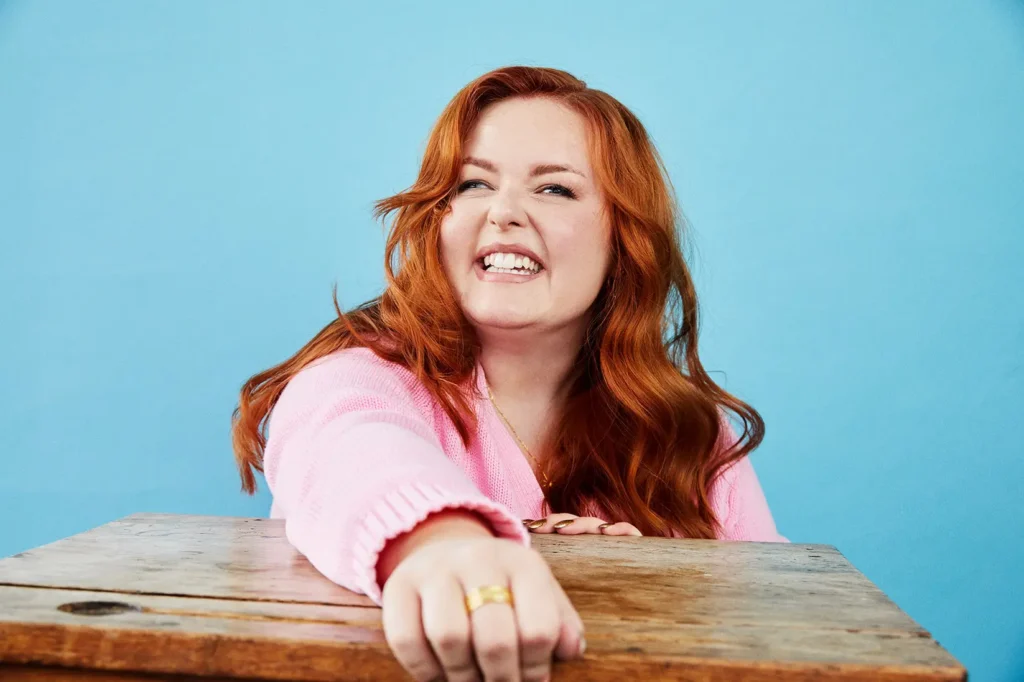
Since she first picked up a camera with her guide dog Olga by her side, Lucy Edwards has spoken with a confidence that never asks for permission, it simply commands attention. Candid, warm, and unapologetically herself, she’s built a voice that feels as real as the stories she tells. Now a well-known UK presenter and award-winning content creator, she’s proof that being blind changes how you navigate the world but it does not make your world smaller. Whether she’s in a BBC studio, chatting on TikTok, or walking the red carpet with Miss Molly, her ever-patient guide dog and sidekick, Lucy owns her space with the kind of energy that fills a room even if she can’t see it.
From YouTube to the BBC
Her career started in 2014, back when she was 17 and trying to figure out how to live in a world that seemed to have gone dark. Losing her sight during her A-levels wasn’t a gentle transition. She grieved, stumbled, then decided to make her own light. There weren’t many blind creators online back then, so she started posting videos, raw, funny, awkward and real, hoping someone out there would get it. People did.
YouTube became her classroom and her stage. The community she found helped her build confidence, and soon, that passion landed her at the BBC. She joined as part of a digital news programme for disabled journalists, quickly learning how to blend storytelling with impact. Her boss, also blind, broke the stereotype she’d been quietly carrying: that leadership and blindness couldn’t coexist. That moment cracked something open and her idea of what was possible expanded.
The power of losing sight
Losing her eyesight didn’t erase who she was. It refined her. Lucy often says her blindness forced her to stop comparing herself with the version of her that could see. “I kept thinking past Lucy was better,” she recalls, “until I realized present Lucy is actually doing alright.” That mental shift, from “I’m broken” to “I’m built differently” changed everything.
She talks openly about internalized ableism, the quiet voice that tells you you’re less because you do things differently. For Lucy, unlearning that meant rejecting the old medical idea of “fixing” herself and embracing the social model of disability, one that says the problem isn’t her body, it’s the world not being built for it. The moment she stopped wishing for a cure, she started designing a future.
Journalism, social media and smashing myths
Breaking into mainstream media was no walk in the park. Lucy had to prove that accessibility and professionalism aren’t opposites. Her first major on-screen moment came with BBC’s Travel Show, where she flew to Kenya to film a documentary. Later came Japan, then awards from the Royal Television Society. Each step built on a simple truth: blind journalists can cover any story, anywhere.
But her reach exploded online. During the pandemic, she joined TikTok, creating short clips that mixed humour with honesty. Her “Blind Girl Does Her Own Makeup” video went viral, racking up millions of views. Suddenly, she had evolved into something more than a broadcaster, she was an influencer, an educator and a businesswoman. Today, she co-runs a social media company with her husband and is launching her accessible beauty brand, ETIA, backed by Estee Lauder’s New Incubation Ventures.
Changing representation, one video at a time
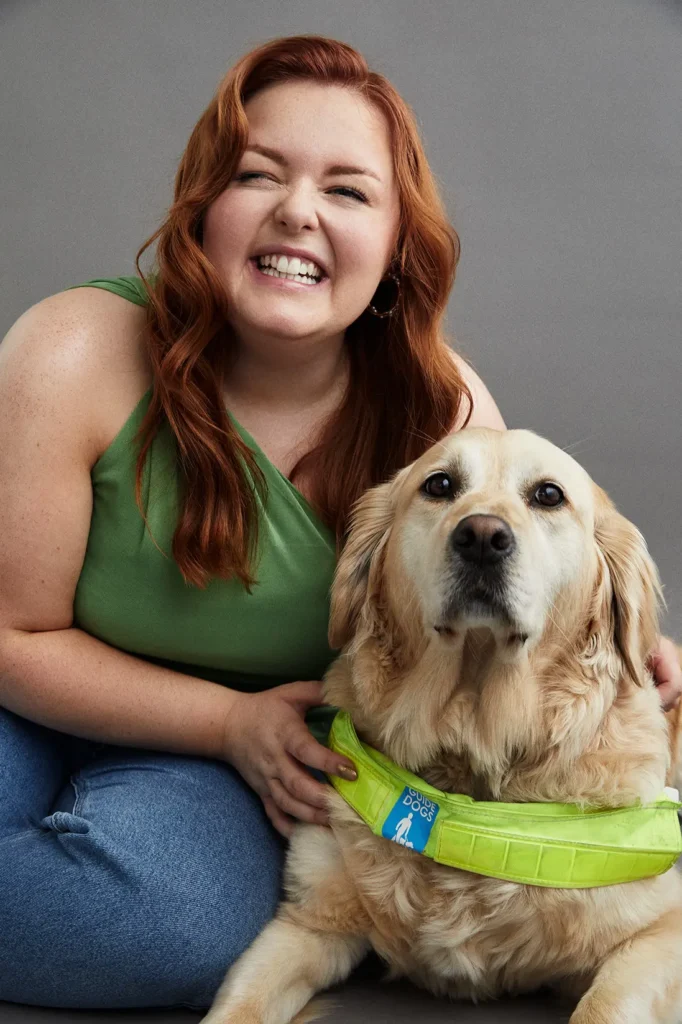
Lucy doesn’t see herself as an inspiration. She sees herself as visible and that’s the difference. Visibility builds understanding. When kids see her on TV with Miss Molly, they grow up knowing blindness is simply another way to be human. She laughs recalling moments when children stop their parents from petting her guide dog because “she’s working,” they’d say. Ten years ago, that awareness was rare but now it’s becoming normal.
She credits much of this shift to social media. “Before, you’d never know there was a blind pianist in a tiny town unless you met him. Now he can go viral.” The digital age has opened doors for creators who’ve been invisible for too long. It’s also helped employers see talent differently. When you watch a blind person edit a video, launch a business, or go live to millions, it challenges lazy assumptions.
Miss Molly and the magic of guide dogs
Ask Lucy who really runs her life, and she’ll probably say Miss Molly. With her signature harness bows that always match Lucy’s outfit, Molly has become an icon in her own right. “She’s my best friend, my colleague, my therapist,” Lucy laughs. Her first dog, Olga, gave her the courage to leave home alone again and Molly brings confidence to the spotlight. Each guide dog marks a different chapter in her life. One of healing, another of thriving.
They’ve attended premieres together, sat front row at events, and yes, even walked red carpets. Lucy jokes that Miss Molly knows how to find the camera better than most photographers. But behind the laughs is a deeper message: independence isn’t about doing everything alone, it’s about finding the right kind of partnership.
Highlights and high impact
Lucy’s proudest professional moments? Being the face of Pantene, where she reworked the ad’s script to centre on touch: how her hair feels, not how it looks. It was groundbreaking . . . a blind woman talking about beauty in her own way, on national TV! Then came Blind Barbie. Seeing a doll with a white cane hit store shelves was emotional not just for Lucy but for parents. Many sent her photos of their kids holding a toy that finally looked like them.
Looking forward
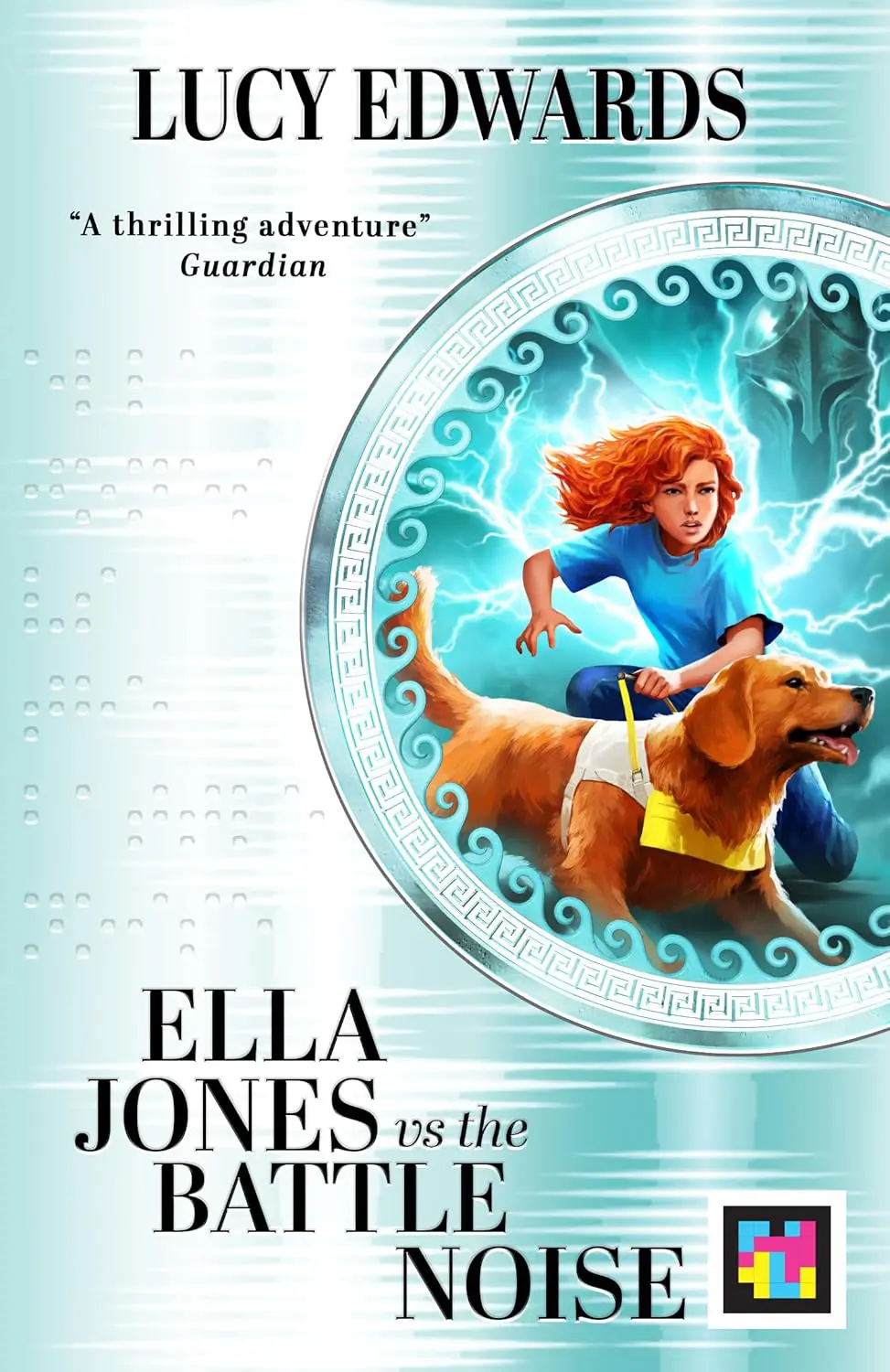
Now, she’s juggling business launches, book tours, and speaking gigs. Her second children’s novel, Ella Jones vs. The Battle Noise, continues her mission to fill shelves with stories that show disability as strength. She jokes that she barely sleeps, but her voice carries pride, not exhaustion.
When asked what legacy she wants to leave, Lucy pauses. “That you can be fashionable, clever and have a disability. Blindness is just another attribute, like being tall or having freckles.”
It’s a sentence she repeats often, because it sums up her philosophy. Her world didn’t shrink when she lost her sight. It simply changed shape and she built something remarkable within it. Lucy Edwards isn’t waiting for society to catch up. She’s already showing what the next version looks like: accessible, creative and unafraid to take up space, one TikTok, one broadcast and one perfectly accessorized guide dog at a time. And she will keep showing up where the stories are. On set, on feeds and in classrooms where kids hold canes and grin at dolls that look like them. She knows how much that first glimpse matters because she lived it. And she lives with a headline she repeats often, her tone soft but resolute: blindness is just another attribute.
Ella Jones vs. The Battle Noise